Why the sentence that makes it easy to say no needs better AI help
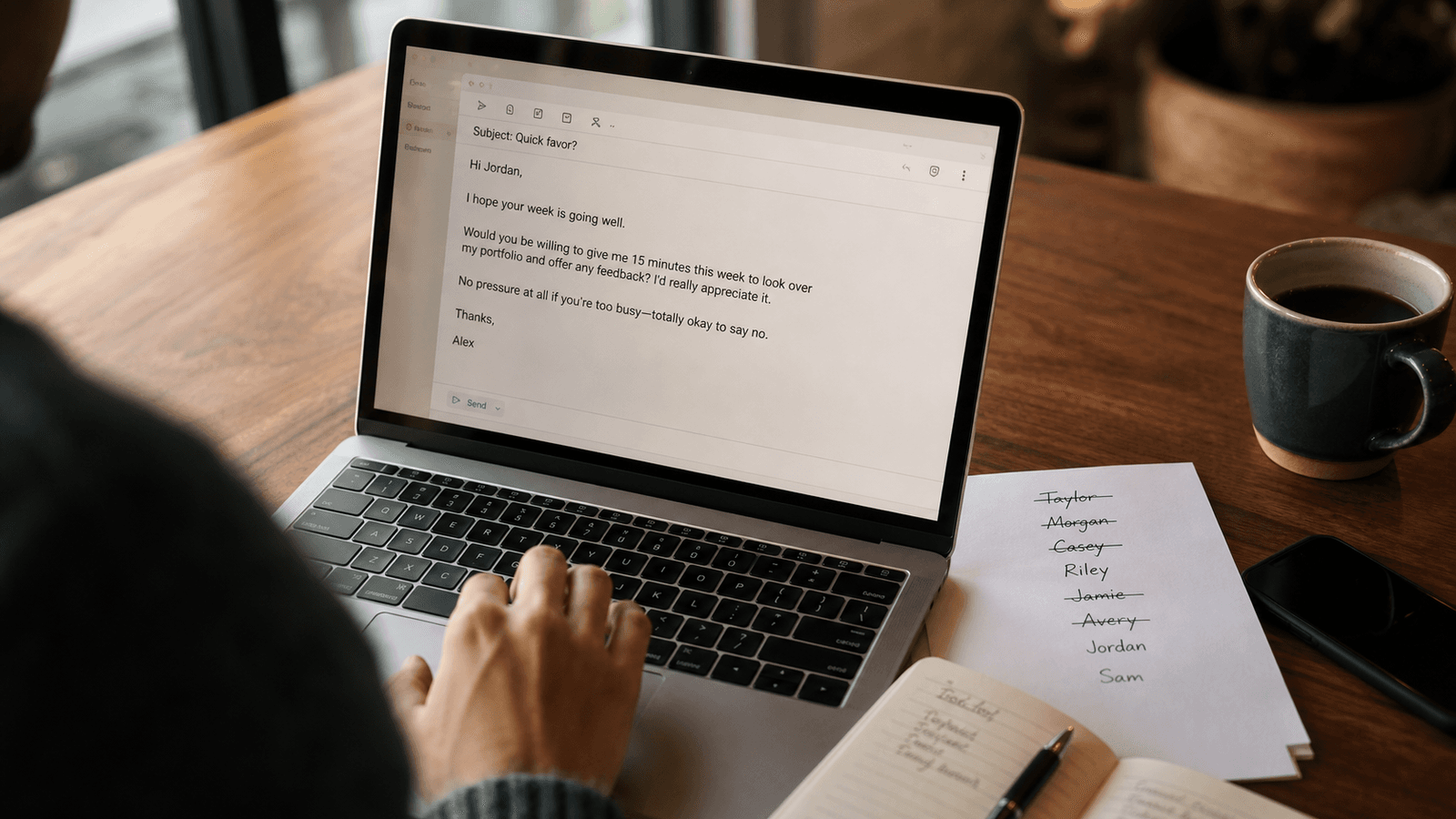
Some asks sound polite and still feel expensive.
Not because they are rude. Not because they are unclear. Because they quietly make the other person responsible for carrying the social weight of saying no.
That is the hidden problem with a lot of everyday work writing.
The message says:
- let me know if you can
- would love your thoughts
- any chance you could take a look
- happy to get your feedback
All of those lines can sound friendly. They can also make the reader feel trapped between silence, delay, and a more awkward decline than the situation deserved.
That is why one of the most useful sentences in work is often the one that makes it easy to say no.
A lot of asks fail because the decline still feels socially expensive
People often think the hard part of a request is making it persuasive.
How do I sound thoughtful? How do I make the favor seem reasonable? How do I explain enough context? How do I avoid sounding abrupt?
Those things matter. But many asks succeed or fail on a quieter dimension.
How easy is it for the other person to decline cleanly if the answer is no?
That matters because the person reading your message may be:
- overloaded
- between meetings
- unsure they are the right person
- willing in theory but not this week
- worried that a partial yes will create a larger obligation
If the message leaves no graceful exit, the reader has to manage that discomfort themselves.
That often leads to the worst outcome for both sides:
- a delayed reply
- a vague maybe
- a soft yes that turns into slow follow-through
- a helpful but resentful answer
- silence that creates more ambiguity than a clean no would have
The writer thinks they made a simple ask. The reader experiences a small social tax.
The best asks reduce pressure without becoming weak
This is where good writing matters.
An easy-out sentence is not there to apologize for asking. It is there to make the shape of the ask honest.
It tells the other person:
- this is optional
- I know your time is limited
- I am not assuming access
- a no is usable information
- I would rather get a clear answer than extract a reluctant yes
That changes the emotional posture of the whole note.
The ask can still be specific. It can still be serious. It can still matter.
But now the request sounds like it came from someone with judgment rather than entitlement.
Most people already know when an ask should include an easy out
This is one reason the problem fits autocomplete so well.
The writer usually does not need AI to tell them whether they are making a favor ask. They already know that.
They know the moment:
- asking someone senior for feedback
- requesting an intro
- nudging a busy customer for a quick answer
- asking a colleague to review something outside their lane
- sending a recruiting reach-out that should not feel presumptuous
The friction is in landing the line cleanly.
How direct should it be? How warm should it sound? How much should it soften the ask? How do you leave room for a no without making the whole message wobble?
That is not a blank-page problem. It is a sentence-shaping problem inside a live message. A closely related sentence-shaping problem appears in the note above an attachment, where two lines can decide how the draft gets read.
Weak ask language creates hidden follow-up work
When the exit path is unclear, strange things happen.
The other person may reply with more delay than the request deserved. They may half-accept. They may offer something adjacent because declining directly feels rude. They may leave the thread sitting until it becomes more awkward to answer than to ignore.
Now the writer has more work too:
- deciding whether to follow up
- reading ambiguity as interest or politeness
- wondering whether the person is too busy or simply not inclined
- rewriting the ask later to make it smaller
- carrying a social uncertainty that one better sentence could have removed
This is why the easy-out line is not just etiquette. It is operational clarity.
It helps the other person answer faster and more honestly. That usually helps the work move faster too.
Full-draft AI often answers the wrong question here
Generation-first AI can help write outreach. But this specific moment is smaller and higher-judgment than it looks.
The writer is not asking:
"Can you write a whole persuasive request for me?"
They are asking:
"Can you help me phrase the line that makes this ask feel human, bounded, and easy to decline?"
That is where full-draft AI often overshoots.
It tends to produce:
- a longer explanatory paragraph
- more politeness than the relationship needs
- a warmer tone that becomes vaguely salesy
- an easy-out sentence that sounds formulaic
- more copy to supervise when the writer only needed one clean line
Now the writer has another block of text to inspect for tone.
Did it sound too deferential? Too formal? Too eager? Too obviously machine-balanced? Did it weaken the ask so much that the real request disappeared?
That is a lot of review overhead for one sentence near the end of an email or message.
Better help belongs inside the actual request
This sentence usually gets written in motion.
Inside Gmail. Inside Mail. Inside Slack. Inside a LinkedIn message. Inside a founder's draft before they ask for an intro.
That context matters.
The writer can already see:
- who they are asking
- how well they know them
- how big the favor really is
- whether the ask is time-sensitive
- whether the relationship calls for directness, softness, or brevity
That is why inline help fits so well here.
The writer stays inside the live message. They keep control of the request. They can accept a suggestion, reject it, or take it word by word until the sentence sounds like something they would actually send.
The AI helps the line land. It does not take over the social judgment of the ask.
The right easy-out line protects authorship too
People often talk about AI writing as a quality issue. It can be that. But in requests, it is also a social-authorship issue.
If the tool gets the easy-out sentence wrong, it can quietly change what the writer is signaling.
The ask may sound:
- more needy than intended
- more formal than the relationship supports
- more passive than the moment calls for
- more manipulative because the "optional" line does not feel sincere
- more generic because the wording sounds copied from outreach playbooks
That is why people want help here without giving up control.
They still want to decide:
- how much pressure is appropriate
- how much warmth is real
- whether the request should feel crisp or conversational
- whether "no worries if not" is enough or whether the note needs a more explicit off-ramp
- how the sentence should sound in their own voice
The tool should support the writer's judgment. It should not fake their social instincts for them.
A good off-ramp often makes the ask more likely to get a real answer
This is the counterintuitive part.
Making it easier to say no does not only make the message kinder. It often makes the message more effective.
Why?
Because the reader no longer has to spend energy managing the decline path. They can just answer honestly.
Sometimes that honest answer is no. Sometimes it is yes, but with narrower scope. Sometimes it is not me, but ask this person instead. Sometimes it is next week, not today.
All of those are better than a vague maybe.
The best ask is not the one that corners someone into agreement. It is the one that makes the real answer easier to give.
The most useful version is usually short
This sentence usually does not need a speech.
It often sounds more like:
- If now is bad timing, no pressure at all.
- Totally fine if this is not a fit, but I wanted to ask.
- If you are slammed, feel free to pass.
- No worries if you cannot take this on this week.
- If this is outside your lane, a quick no is genuinely helpful too.
The exact wording changes with the relationship. But the job stays the same.
Keep the ask human. Keep the pressure honest. Make the decline path clean.
That is a lot of leverage from one sentence.
Why this fits Typeahead
Typeahead is an AI autocomplete app for Mac that works across the apps where you already write.
It runs locally on your Mac. Suggestions appear inline while you type. You can accept the full suggestion, take it word by word, or ignore it completely.
That interaction model fits favor asks especially well.
When the real job is to make a request feel specific without making the other person carry all the pressure of declining it, inline autocomplete is a better shape of help than leaving the message, generating a full outreach note somewhere else, and editing it back down into the one sentence you meant to write.