






Autocomplete or a rewording tool for Mac?
5 min read
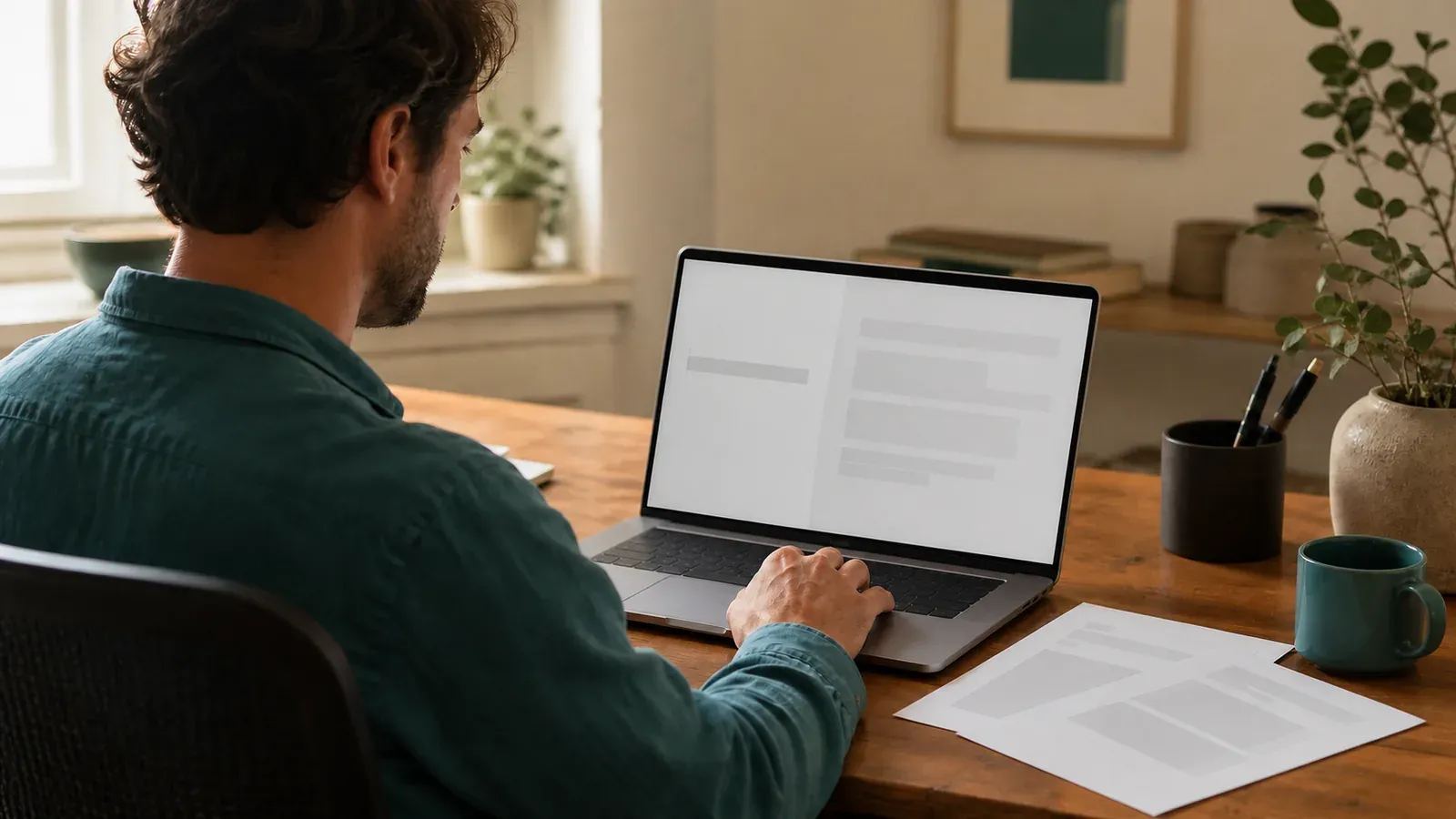
The useful difference is the moment when control changes hands. A rewording tool transforms words you have already written. Autocomplete extends a sentence while you are still shaping it.
That distinction affects your voice, your attention and the kind of problem each tool can solve. For a Mac writer, it matters more than a broad claim about which tool writes better.
What a rewording tool does
QuillBot defines paraphrasing as putting existing text into new words without changing its overall meaning. Its workflow starts with text you paste, type or upload. You choose a mode, review the altered result and copy what you want.
The starting material is finished enough to select. That makes rewording useful when a paragraph feels stiff, a sentence needs a different tone or existing copy must fit a tighter space.
Apple’s built-in Writing Tools follow the same post-draft pattern. You select existing text, request a rewrite or tone change and then compare, undo or revert the result.
What autocomplete does during drafting
Typeahead by default continues what you are writing, and you control how far it goes in settings, including whether it can continue into a new sentence automatically. It does not generate a passage from a prompt or replace a finished paragraph. You begin the thought, a suggestion appears inline at the cursor, with a floating bubble available in automatic mode when inline is not possible, and you decide whether to accept the whole suggestion or continue in your own direction.
Typeahead processes writing locally. It runs on macOS 14 or later and helps in the text field where the sentence is already forming.
Autocomplete holds the pen at the cursor. Rewording takes the page to another desk.
That second desk can be useful. Rewording has a cost: selecting text, opening an interface and comparing versions pull you out of drafting. Autocomplete avoids that detour. The difference is explored further in why AI autocomplete is not AI writing.
Two moments, two kinds of help
Consider an email explaining a delayed project. While drafting, you type: The risk of shipping on Friday is. Autocomplete can help finish the sentence you have already aimed.
Later, you reread the full email and find that it sounds defensive. A rewording tool can transform the finished passage into a calmer version. It has more text to change, but it also assumes more control over the expression.
The same split appears in an essay. Autocomplete can carry momentum through a sentence whose idea is clear but whose ending is not. Rewording can compress a completed introduction after you see how the argument developed.
Voice preservation needs scrutiny
Some rewording tools explicitly try to retain voice. Grammarly’s paid voice feature builds separate profiles for documents and messages. The writer highlights a passage and applies “Rewrite in my voice”.
The mechanism still replaces finished text. A profile may guide the replacement, but the writer must compare the new passage with the original and decide what survived.
That review matters. A 2026 study of more than 880,000 texts found that LLM polishing and rewriting generally preserved core content while reducing variance in writing complexity by 21 to 50 percent across the studied datasets and models. Meaning can remain while stylistic differences narrow.
Personal voice and team tone differ
A writer protecting a distinctive cadence has a different goal from a team standardizing customer messages. Reduced variation can help a team sound consistent. The same reduction can make an essayist sound less recognizably themselves.
Decide which outcome matters before choosing a workflow. Shared tone often benefits from reviewing finished text. Personal voice benefits from keeping the writer in control sentence by sentence.
What Mac support really means
A rewording tool for Mac may be a native app, a browser tool or an operating-system feature. Those experiences are not interchangeable.
Apple Writing Tools require macOS Sequoia 15.1 or later and a Mac with Apple silicon, subject to Apple’s language and storage requirements. Grammarly offers a Mac desktop product that can rewrite highlighted text.
As of August 2026, Wordtune has no standalone Mac app or Safari extension. Mac users must use its web app or a supported browser other than Safari. Check where a tool works before assuming the Mac label means help inside your usual writing app.
What free and one-time mean
QuillBot’s free paraphraser accepts up to 125 words per pass, includes Standard and Fluency modes and has no daily paraphrase limit. That is useful for short passages if a post-draft workflow fits your work.
Typeahead is available with a 14-day free trial. Free answers how much you can transform today. The trial answers whether the drafting tool earns a place in your week.
A practical decision checklist
Choose based on the writing moment you want to improve.
- Choose autocomplete if you know what you mean but need help completing sentences without leaving the draft.
- Choose a rewording tool if finished text needs a new tone, tighter phrasing or another version to compare.
- Check whether Mac support means a native app, browser access or Apple Intelligence.
- Test voice on passages whose rhythm matters, not only on generic business copy.
- Treat free limits, hardware requirements and recurring fees as separate parts of the decision.
The right tool is the one that takes control at the moment you are comfortable giving it up.