






Private AI autocomplete for unpublished manuscripts
4 min read
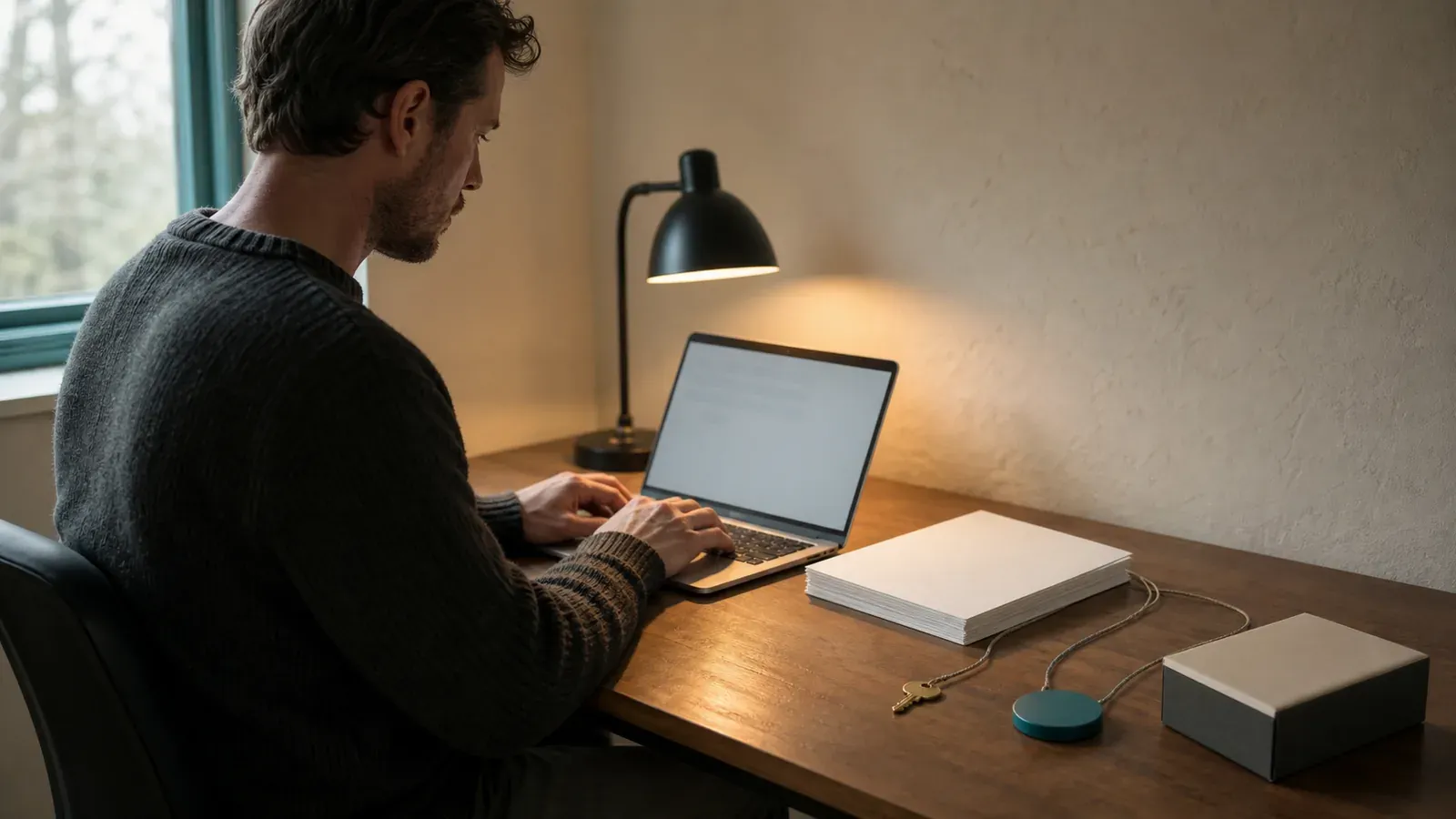
Your unpublished manuscript does not need to enter a cloud-AI data path for autocomplete to help finish a sentence. Typeahead completes sentences you have begun and processes that writing locally on your Mac.
The most valuable secret in a novel may be six words in the middle of chapter twelve. A writing assistant should not need custody of those words to help with the seventh.
The manuscript is the sensitive asset
An unfinished draft can contain an ending, a client’s confidential material or an interview subject’s identity. An outline can reveal nearly as much as the manuscript itself. Privacy decisions therefore belong at the start of the writing process, while the material is still messy and sensitive.
The Authors Guild warns authors that entering drafts, outlines, research or interview transcripts into public chatbots may expose confidential material, compromise future rights or conflict with publishing agreements.
Copyright does not keep a draft private
The U.S. Copyright Office explains that copyright covers published and unpublished works. Protection generally begins when original writing is created and fixed in a tangible form, although copyright does not protect the underlying ideas themselves.
That protection does not determine where a writing service transmits or stores your manuscript. A draft can be protected by copyright and still travel through a data path the author did not intend. Copyright and confidentiality solve different problems.
Public chatbot settings deserve scrutiny
Cloud-AI services do not all handle content identically. Their settings, retention rules and product tiers matter.
OpenAI’s consumer-services guidance says content is stored on OpenAI and trusted service-provider systems. Limited authorized personnel or providers may access it for specified purposes. Whether content may be used for model improvement depends partly on the user’s opt-out status.
Google’s Gemini Privacy Hub describes different behavior based on settings. Some chats may receive human review. With Keep Activity enabled, activity may be used to improve services and train generative models. Temporary chats and chats with Keep Activity off are retained for 72 hours and ordinarily are not used for training unless the user submits feedback.
These details do not mean every cloud service trains on every draft or exposes it publicly. They mean a writer must examine the particular data path instead of relying on a general promise about AI.
The Authors Guild made that consequence explicit in its April 2026 publishing guidance. It urged publishers and other industry professionals to obtain written author permission before uploading a manuscript to a consumer AI system and recommended safeguards against training use.
What the Mac app processes locally
Typeahead is autocomplete. It completes a sentence you have already started, in your voice. You stay the author of the manuscript: you decide what each chapter says, and Typeahead helps the sentence you are already writing reach its end sooner.
That distinction narrows both the job and the data involved. The app helps at the cursor while authorship remains with the writer. This writer-specific autocomplete workflow explains why completing your prose is different from requesting an AI first draft.
Exactly what uses the network
Typeahead processes writing locally. It goes online only to check your license, look for updates and download your AI model. During autocomplete, your writing never leaves the Mac.
Local writing processing is the accurate description. A private AI writing tool should state that boundary plainly, so a writer can check it against the work they are protecting.
The local architecture applies to the Typeahead Mac app. Writers comparing data paths should look at where each app processes a draft, and Typeahead processes it on the Mac where the manuscript is written.
Scope, platform and price
The app requires macOS 14 or later. It is available with a 14-day free trial.
Local AI autocomplete keeps manuscript processing on a supported Mac. The model downloads once, then completions run on the Mac itself, so an unpublished chapter takes shape with help at the cursor. Your writing never leaves the Mac.
A practical privacy checklist
Ask what a tool means by offline.
- Identify the sensitive material before choosing a tool: draft prose, plot details, client work, research and transcripts.
- Separate local writing processing from license activation, updates and model downloads.
- Check the service’s current retention, review and training settings before entering confidential material.
- Confirm that publishing agreements and client terms permit the chosen data path.
- Distinguish the Mac app from web tools that process writing on a server.
Privacy is not a mood created by a lock icon. It is the route your unfinished sentence takes.