Why the sentence that confirms the decision needs better AI help
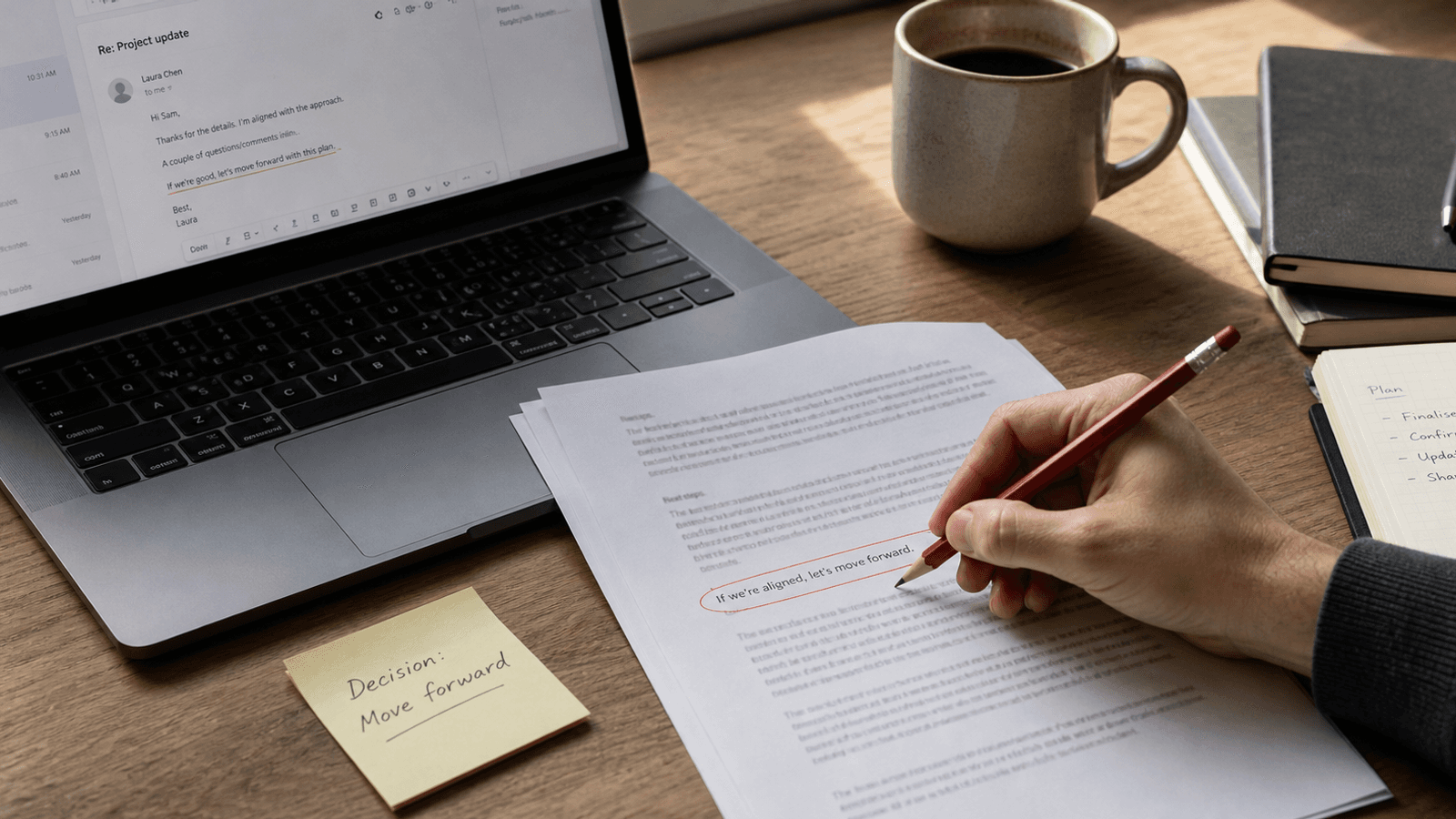
Some work writing is not about generating options.
It is about ending the drift between them.
That is a very specific kind of sentence.
It says things like:
let us go with option two and ship the smaller version first
agreed, we will keep the original scope and move the date by one week
yes, let us send this version and leave the broader point out
we are aligned on the direction, so I will update the draft accordingly
this is the call we are making, and I will close the loop with the team
These are rarely long sentences. They still do a lot of work.
One clean confirmation sentence can prevent:
a meeting that happens only because nobody knows whether the decision was real
a project thread where three people move in three different directions
a draft that stays editable long after it should have become the version
a customer follow-up built on the wrong interpretation of "probably"
a soft consensus that disappears the moment somebody asks what was actually agreed
That is one reason AI writing help is often more useful inside the sentence than above it.
A lot of work slows down because nobody writes the line that makes the choice real
Teams often assume decisions happen when everyone seems broadly aligned.
They usually do not.
A lot of alignment is still only atmospheric until somebody writes the sentence that makes it operational.
That sentence usually has to do several things at once:
make the choice explicit
sound firm without sounding theatrical
preserve the reasoning without reopening the whole debate
point to the next step without adding another essay
fit the live channel where the discussion already happened
That is not blank-page writing.
It is commitment writing.
The sentence matters because people plan around tone almost as much as content
Most people do not struggle because they cannot tell when a decision has been reached.
They struggle because the wrong tone changes what the decision feels like.
If the sentence is too soft, people hear "still open."
If the sentence is too sharp, people hear "discussion over" in a way that creates resentment.
If the sentence is too padded, people lose the actual call inside the explanation.
If the sentence is too vague, each reader pulls out a different next step.
That is why this moment gets rewritten so often.
The writer is not just choosing words. They are deciding how final, collaborative, narrow, and actionable the decision should sound.
A weak confirmation sentence creates expensive ambiguity
Bad decisions are one problem.
Half-confirmed decisions are another.
Those create their own predictable mess:
one person starts executing while another still thinks the issue is under review
somebody forwards the thread without the line that would have clarified the call
the draft keeps collecting edits because nobody knows whether it is settled
a stakeholder objects later because the confirmation never sounded final enough to notice
the same discussion comes back tomorrow disguised as a new question
This is why decision-confirming language matters.
It does not just document the call. It turns the call into something people can reliably act on.
The hard part is usually not the decision itself
By the time someone is ready to write the confirmation, the thinking is often done.
They usually already know:
which option won
what tradeoff the team accepted
how much certainty is warranted
who still needs reassurance
what should happen next if the decision is real
What slows them down is landing that judgment in one sentence that sounds clean enough to trust.
The useful version usually has to be:
clearer than "sounds good"
calmer than a victory lap
narrower than a summary of the whole debate
stronger than a hint
short enough to live in Slack, email, docs comments, or a browser field
That is a shaping problem, not an ideation problem.
Generation-first AI often adds too much uncertainty or too much ceremony
This is where full-draft AI regularly misses the point.
The writer does not need a fresh set of options. They need a sentence that closes the option set.
Generation-first tools often:
turn the confirmation back into a balanced discussion
add diplomatic cushioning that makes the choice sound less real
produce a paragraph that restates context instead of naming the call
smooth the sentence into generic professionalism that nobody really acts on
create a second review task where the human has to cut the answer back down to one usable line
The output can look complete while leaving the actual commitment blurrier than before.
That is not helpful.
The test is simple: after reading the sentence, does everyone know what was decided?
Better help stays close to the writer's decision boundary
When someone is confirming a decision, they usually already hold the key judgment.
They know whether the sentence needs to sound:
decisive
reassuring
narrow
time-bound
quietly final
The AI does not need to invent that judgment.
It only needs to help the writer move through it faster without changing the call underneath it.
That is why lighter, inline help fits so well here.
The human starts the sentence. The human owns the call. The human can accept the suggestion, ignore it, or take it word by word until the line sounds right.
The AI helps with momentum. It does not become the decision-maker.
This kind of writing happens across apps while the choice is still warm
The sentence that confirms the decision rarely gets its own formal drafting ritual.
It usually appears in:
Slack
email
docs comments
project tools
CMS notes
browser-based workspaces where the draft is already open
That matters because the surrounding context is already doing part of the work.
The thread tells you what is still unsettled. The relationship tells you how hard the sentence can land. The channel tells you how much explanation it can carry.
Leaving that moment for a separate AI workspace often adds one more layer between the decision and the sentence that is supposed to make it real.
Good confirmation writing ends drift without killing momentum
The best confirmation sentence does not sound robotic or heavy.
It simply makes the next move obvious.
It tells people:
this is the call
this is the shape of the call
this is what happens now
this is what is no longer open
this is the sentence to plan around
That kind of writing keeps projects moving. It keeps teams aligned. It keeps decisions from dissolving back into atmosphere.
It also protects authorship.
The sentence still sounds like a person making a call, not a machine summarizing one.
Why this fits Typeahead
Typeahead is an AI autocomplete app for Mac that works across the apps where you already write.
It runs locally on your Mac. Suggestions appear inline while you type. You can accept the full suggestion, take it word by word, or ignore it completely.
That interaction model fits decision-heavy writing especially well.
When the job is to make one sentence clear enough that a choice becomes real, inline autocomplete is a better shape of help than leaving the live thread for a second drafting surface and supervising a larger machine-written answer.
The best help in these moments is not more options.
It is a faster route to the line that makes the decision usable.