Why the message that becomes precedent needs better AI help
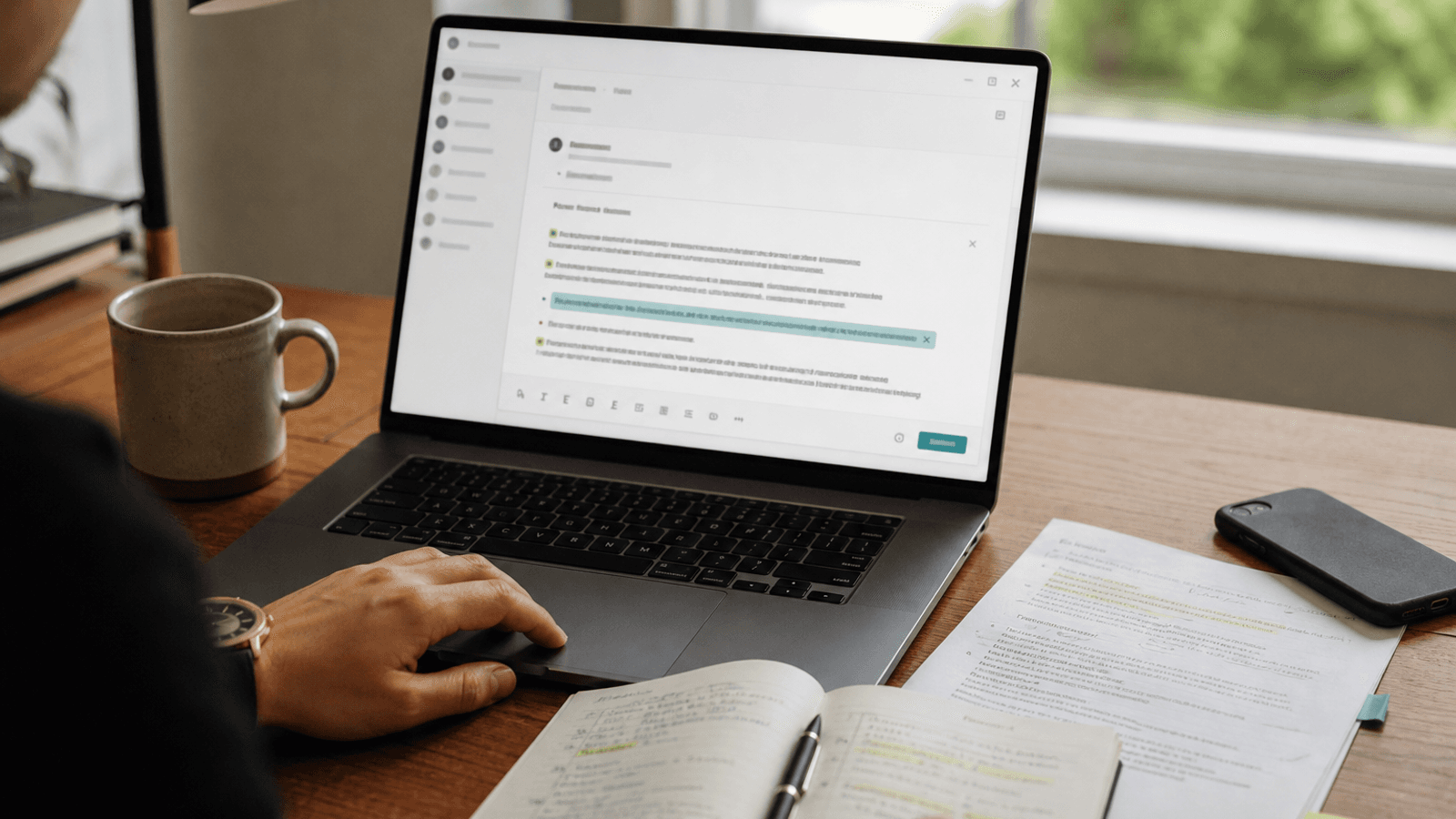
Some work messages do not stay small.
They get reused. They get quoted. They get copied into a doc. They get treated as the pattern for the next decision.
That changes the writing job.
You are not only sending one response. You are setting a precedent, whether you meant to or not.
That is one reason the right AI writing help here often looks more like autocomplete than full-draft generation.
Precedent-setting writing hides inside ordinary work
People usually think of precedent as a legal or policy concept.
But it shows up in normal work all the time.
One sentence becomes the reference point for what happens next:
- the customer exception that other customers will ask for later
- the scope note that quietly becomes the team's rule
- the approval phrasing that sets expectations for future requests
- the internal explanation that gets pasted into the next ticket
- the manager message that becomes the standard answer
None of these moments look dramatic when they happen. They still matter because language has memory inside organizations.
Once a sentence becomes reusable, it stops being only situational.
It starts shaping future judgment.
The hard part is not having an answer
Most precedent-setting messages are not difficult because the writer is confused.
Usually the writer already knows the decision.
The friction is in how narrowly or broadly the sentence lands.
They are trying to answer several questions at once:
- is this specific to this case, or does it sound like a general rule?
- is the boundary clear, or did the wording leave a loophole?
- does the sentence sound fair without sounding weak?
- will someone quote this later in a way I would still stand behind?
- am I solving today's request while accidentally creating tomorrow's problem?
That is not a blank-page problem.
It is a calibration problem. Calibration also means leaving room for personal style to move.
Full-draft AI can widen the rule without meaning to
Generation-first AI tools often assume the writer wants help producing a polished complete response.
Sometimes that is useful. It is risky when the message may turn into precedent.
Why?
Because generated text is often optimized for fluency before constraint.
That can create subtle problems:
- a sentence sounds more open-ended than the real decision
- an exception starts reading like a repeatable policy
- a hedge gets interpreted as permission
- a softener weakens a boundary that needed to hold
- a polished explanation adds language nobody intended to commit to
The draft can look reasonable and still leave behind the wrong rule.
That is an expensive mistake when one sentence will be reused five more times.
A lot of work gets standardized by accident
This is part of why professional writing feels heavier than it looks.
People are rarely only writing for the present moment.
They are also writing for:
- the coworker who will borrow the phrasing next week
- the stakeholder who will cite it in a meeting
- the support lead who will turn it into a macro
- the project manager who will treat it as process
- the customer who will forward it and ask for the same exception again
That is how local wording choices become operating norms.
Not through formal policy every time. Often through repetition.
The sentence that happened to be sent first becomes the sentence everyone inherits.
Better help should stay close to the writer's judgment
For precedent-setting writing, the useful question is not: "Can AI draft a plausible response?"
The better question is: "Can AI help me land the exact sentence I am willing to live with later?"
That points toward lighter assistance.
The writer starts the message. The writer sets the intent. The writer decides how much to open, how much to constrain, and what should remain case-specific. The AI helps continue the sentence without becoming the first author of the rule.
That is where autocomplete makes more sense.
It keeps the human close to the part that matters: the judgment encoded in the wording.
If the suggestion sharpens the sentence, take it. If it broadens the commitment, ignore it. If only a few words help, keep those and move on.
That is a better control surface than supervising a whole generated block and trying to edit the precedent back out of it.
Across-app work makes this problem bigger
Precedent-setting writing does not live in one clean document.
It happens across Slack, email, shared docs, project tools, comments, support consoles, and browser forms.
That matters because the same sentence often travels.
A line written in one place gets copied somewhere else. An explanation in a thread becomes guidance in a doc. A one-off answer becomes a standard response.
If getting AI help requires leaving the app, restating the context, reviewing a larger draft, and pasting something back, you add a lot of ceremony around a moment that mostly needed sharper phrasing.
You also create more opportunities for the language to drift away from the original judgment.
Inline help fits better when the sentence may become portable.
The writer stays in the live surface. The context stays warm. The wording stays attached to the real moment where the decision is being made.
Good precedent-setting writing protects future clarity
People sometimes think writing is only about communication.
A lot of professional writing is really about future interpretation.
The best sentence does more than answer the current question. It makes the next similar question easier to handle.
It protects against:
- accidental inconsistency
- avoidable rework
- confusing exceptions
- policy drift
- relationship damage caused by mixed signals
That is why this is such a revealing test for AI writing tools.
If the tool cannot help with the sentence that may be reused later, it is missing a large part of how real work language becomes process.
Why this fits Typeahead
Typeahead is an AI autocomplete app for Mac that works across the apps where you already write.
It runs locally on your Mac. Suggestions appear inline while you type. You can accept the full suggestion, take it word by word, or ignore it completely.
That interaction model fits precedent-setting writing especially well.
It helps at the moment where a lot of judgment-heavy work actually happens: inside the sentence that might get reused later.
You keep authorship of the decision. You keep control over the boundary. And the AI helps with momentum without quietly expanding the rule on your behalf.
For a lot of modern work, that is the difference between writing help that feels useful now and writing help that creates a cleanup job later.