Why sales engineers need AI autocomplete more than AI demo copilots
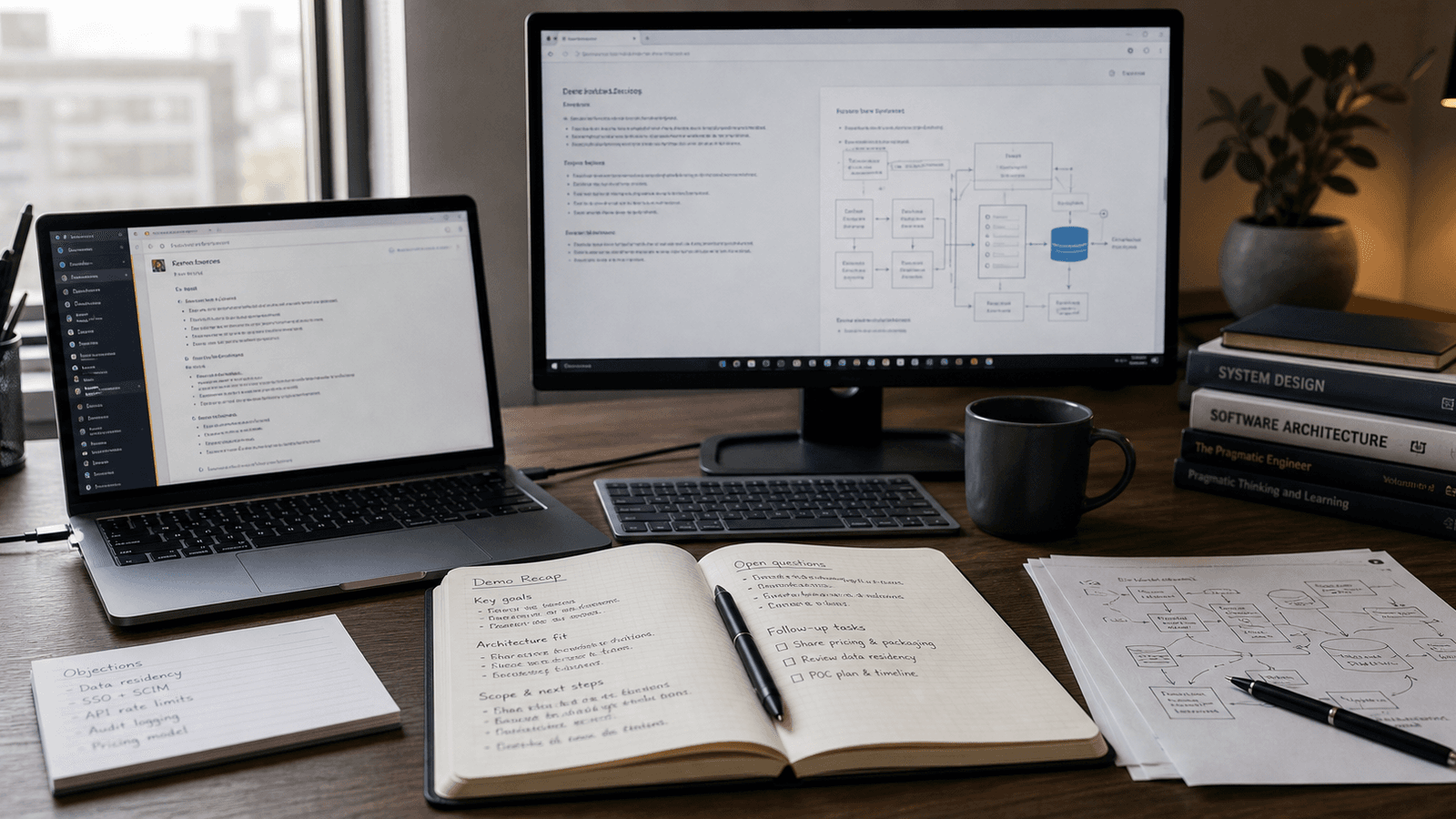
Sales engineers are surrounded by AI promises that sound bigger than their real bottlenecks.
Summarize the call. Generate the follow-up. Answer objections automatically. Turn the transcript into next steps. Build a demo copilot.
Some of that is useful. Most of it is aimed at the wrong layer of the job.
Sales engineering is not mainly slowed down by a lack of generated content. It is slowed down by the writing that happens around precision, trust, and timing.
The recap after the demo. The internal Slack note that tells account execs what actually landed. The follow-up email that needs to be confident without overcommitting. The technical clarification that should reassure the buyer without turning into a wall of text.
That is why AI autocomplete often fits sales engineering better than another AI tool that tries to automate the whole interaction from the outside.
The hard part starts after the call
From the outside, sales engineering can look presentation-heavy.
The live demo. The architecture walkthrough. The security review. The technical Q and A.
Those moments matter. But a lot of the real leverage shows up in the writing that follows them.
That writing is constant:
recap emails after a prospect call
internal notes for the AE or founder
Slack messages about deal risk
answers to technical follow-up questions
implementation clarifications
mutual action plan comments
handoff notes for success or onboarding
phrasing around gaps, workarounds, and roadmaps
None of this is blank-page writing. Most of it begins with context that is already in the sales engineer's head.
The problem is turning that context into language that is accurate, calm, and useful before the deal moves on without it.
Demo copilots solve a more theatrical problem
AI demo products tend to focus on visible moments.
What should appear on screen. What objection might come next. What the transcript can be turned into afterward.
That makes sense for a demo. It is also not where a lot of trust gets won.
Trust often depends on the sentence after the meeting. The one that confirms what was promised. The one that explains a limitation without sounding evasive. The one that tells the internal team what really needs to happen next.
Those are not moments where a sales engineer wants a machine to generate a polished block of generic reassurance. They need help landing the wording cleanly while the judgment stays theirs.
Sales engineering writing is high-context and easy to get wrong
This is one reason the writing load feels heavier than it looks.
A small sentence can carry a lot:
how much confidence to project
how much nuance to include
whether a workaround sounds reasonable or fragile
whether a roadmap mention sounds helpful or like a commitment
whether the internal note reflects the political reality of the deal
That is not commodity writing. It is judgment under time pressure.
When AI generates the whole message, it often forces the sales engineer into a second job: reviewing whether the model sounded too certain, too vague, too salesy, or too smooth for the situation.
That is extra work, not real leverage.
The better help is usually sentence-level help
A lot of sales engineering writing does not need invention. It needs momentum.
You already know what happened on the call. You already know what the buyer is worried about. You already know what your team can and cannot promise.
The slowdown is at the sentence level:
finding a cleaner way to explain the tradeoff
softening a line without weakening it
finishing a recap while the details are still fresh
phrasing the next step clearly enough that nobody misreads it
That is where autocomplete helps more than generation-first AI.
You start the sentence yourself. The suggestion appears inline. If it fits, you take it. If it drifts, you keep typing.
The interaction stays light enough that you do not lose the actual technical and commercial context you were trying to preserve.
Across-app work matters more here than people realize
Sales engineers do not write in one destination.
The work moves across apps all day:
Slack for internal coordination
email for follow-ups
docs for solution notes
CRM fields for deal context
browser forms for security or procurement responses
meeting notes before the memory fades
That scattered workflow is why chat-style AI often feels awkward in practice. Each time you leave the app to prompt a tool, you add friction to work that is already moving fast. Each time you paste generated text back, you create another review step.
Autocomplete fits better because the help shows up where the writing already lives.
The value is not sounding smarter. It is reducing drag without losing trust
Sales engineers do not need help sounding artificially polished. They need help moving quickly without becoming sloppy.
That usually means:
keeping follow-ups crisp
preserving technical accuracy
avoiding overpromises
staying human in buyer-facing notes
getting internal alignment faster
These are small wins, but they compound across every active deal.
The best writing help here should not act like a second sales engineer writing in your place. It should act more like a low-friction continuation layer that helps you finish what you already mean.
Why this is the right shape for Typeahead
Typeahead is an AI autocomplete app for Mac that works across the apps where you already write.
It runs locally on your Mac. Suggestions appear inline while you type. You can accept the full suggestion, take it word by word, or ignore it completely.
That makes it a strong fit for sales engineering.
It helps in the real writing layer of the job: the follow-ups, clarifications, internal notes, and small high-stakes sentences that move deals forward after the meeting ends.
You stay in control of the claim. You stay in control of the tone. The AI helps with momentum, not judgment.
For sales engineers, that is often more useful than another demo copilot trying to automate the most visible part of the workflow while missing the writing that actually carries the deal.