Why RevOps teams need AI autocomplete more than AI CRM copilots
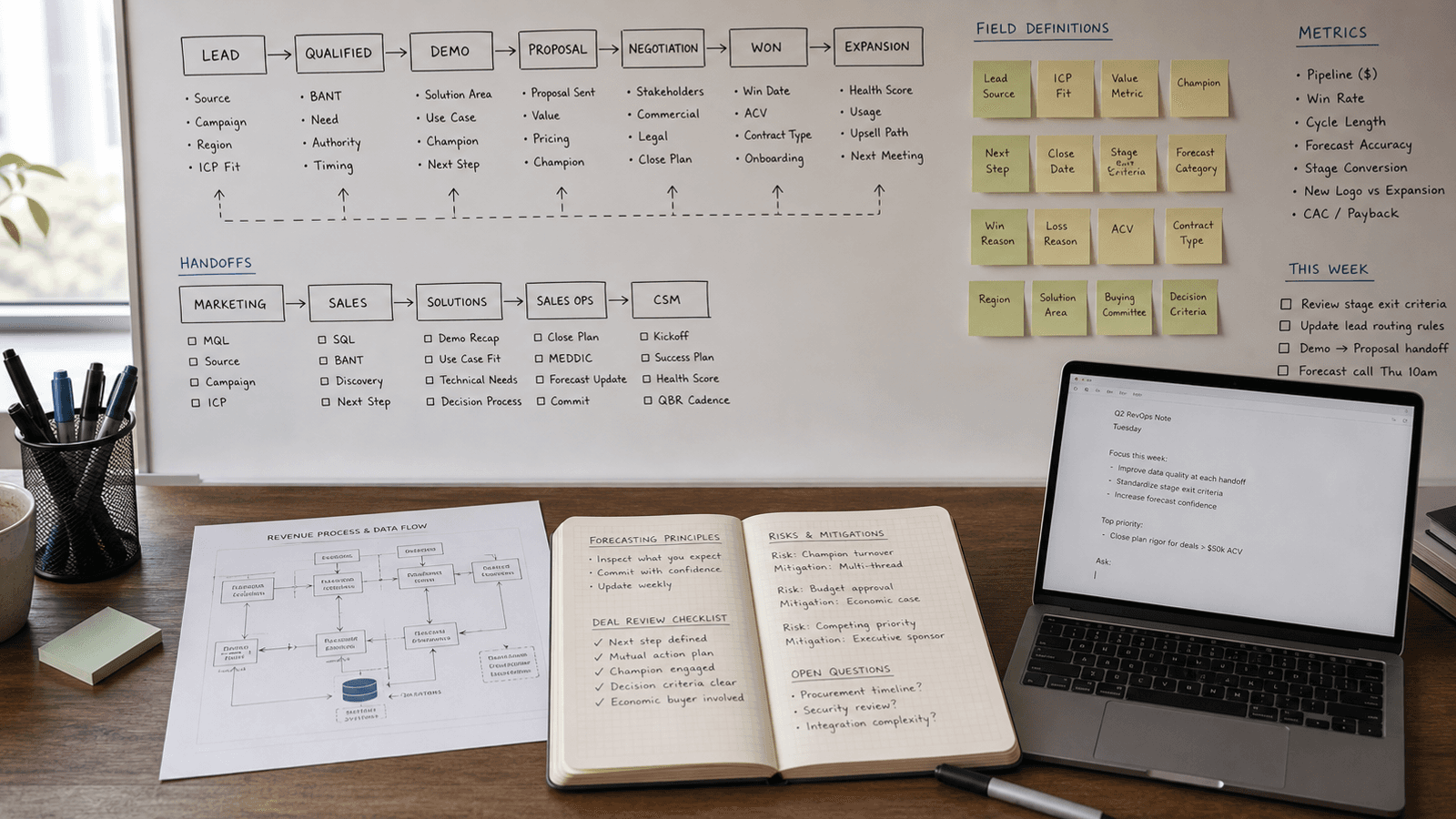
Revenue operations does not break because nobody has a dashboard.
It breaks when the meaning around the dashboard does not travel cleanly.
The field definition that got interpreted three different ways. The handoff note that was too vague to act on. The pipeline comment that did not explain the real risk. The Slack message that asked for a fix without enough context. The follow-up that sat half-written because someone knew what they meant but had not phrased it yet.
That is why RevOps teams often need AI autocomplete more than AI CRM copilots.
The visible systems are the CRM and the dashboard. The daily friction is the writing between them.
When people picture RevOps work, they usually picture:
Salesforce
HubSpot
dashboards
routing rules
lifecycle stages
attribution debates
All of that matters.
But a lot of the real work happens in the smaller writing around those systems:
explaining why a field changed
documenting how a handoff should work
clarifying why a report does not match expectations
asking sales or marketing to fix data hygiene without starting another circular thread
summarizing what changed after a process update
That writing is not admin overhead. It is how the operating system becomes understandable enough for other teams to use.
RevOps writing is rarely a blank-page problem
Most RevOps people already know the underlying issue.
The lead source mapping is wrong. The territory rule created noise. The lifecycle stage logic is inconsistent. The dashboard is technically correct but operationally misleading. The process is fine, but nobody is following it the same way.
The hard part is turning that reality into language that is specific, calm, and actionable.
Should this note be firmer? Is this explanation too technical for the sales team? Does this sentence blame the wrong group? Is this concise enough for Slack but clear enough to prevent another round of confusion? Does this handoff comment actually tell the next person what they need to do?
That is a sentence-level problem.
Small wording problems create big operational drag
RevOps sits in a strange position.
The team often sees the problem early, but depends on other teams to fix it. That means a lot rides on how the issue is explained.
One vague sentence can create three more clarification messages. One overly abstract process note can make a rollout harder than it needs to be. One defensive explanation can turn a solvable data problem into an argument about ownership. One weak handoff can slow down revenue work across teams that were already moving too fast.
That is why writing quality matters so much here.
The job is not only to understand the system. It is to explain the system in a way other people will actually act on.
Why CRM copilots miss the harder layer
A lot of AI for revenue operations aims at the main system.
Summarize the account. Suggest the next action. Fill in the CRM. Generate the report takeaway. Draft the sequence.
Some of that can help.
But RevOps teams are often not slowed down by a total lack of CRM assistance. They are slowed down by the writing around the process:
the note that explains why a routing change was made
the message that asks a rep to clean up an opportunity record
the summary that turns reporting noise into a clear recommendation
the comment that helps marketing and sales interpret a mismatch the same way
the handoff sentence that keeps the next team from making the same mistake again
That is a different job from having AI operate inside the CRM itself.
The hard part is rarely "please produce more CRM content." The hard part is "help me finish this exact explanation in the right tone."
The workflow moves across apps, not inside one revenue tool
RevOps writing does not live in one system.
It moves through Slack, docs, spreadsheets, dashboards, ticket comments, CRM records, planning notes, email, and browser-based admin panels all day.
That matters because the writing load is fragmented:
a comment on a deal record
a short explanation in a dashboard thread
a process note in a doc
a Slack message to sales leadership
a follow-up to marketing ops
a ticket update for someone fixing the workflow
If the AI help only lives in a separate generation window, the work gets heavier:
open another tool
restate the context
paste the draft or question
review a larger output
cut it back down
paste it into the place where the sentence belonged in the first place
That is awkward when the real work is dozens of small, careful explanations across the day.
Autocomplete fits better because it helps where the writing is already happening.
Control matters because RevOps is accountable for precision
RevOps teams are not trying to sound creative. They are trying to be precise enough that a system change, report interpretation, or handoff instruction does not cause downstream confusion.
That changes what useful AI looks like.
The goal is not a polished block of machine-written text that sounds finished before the thinking is finished. The goal is a better continuation of the sentence the operator was already steering.
That matters because RevOps writing contains hidden choices:
what to simplify
what to qualify
what to escalate
what tone will get a faster response
what wording will reduce ambiguity instead of spreading it
Generation-first AI can make the explanation look complete before the judgment is complete.
Autocomplete is narrower. That is exactly why it can feel more useful.
You keep the meaning. You keep the accountability. You accept what helps and ignore what does not.
Better AI help for RevOps should feel quiet
The most useful AI for revenue operations is not the loud demo that promises to run the whole funnel.
It is the quieter help that improves the communication layer around the funnel:
one clearer handoff note
one sharper explanation of a metric change
one better message to the team cleaning up data
one faster process update
one calmer sentence that keeps another cross-functional thread from spiraling
That kind of help compounds because revenue operations depends on other people understanding the system well enough to use it correctly.
The CRM may be the center of record. The sentence is what gets the work aligned.
That is why RevOps teams often need AI autocomplete more than AI CRM copilots.
If you want AI writing help that fits the real shape of RevOps work, try Typeahead. It works across the apps where RevOps teams already write on their Mac, runs locally, and helps finish the sentence without taking ownership away from the person responsible for how the system is actually being explained.