Why procurement teams need AI autocomplete more than AI sourcing copilots
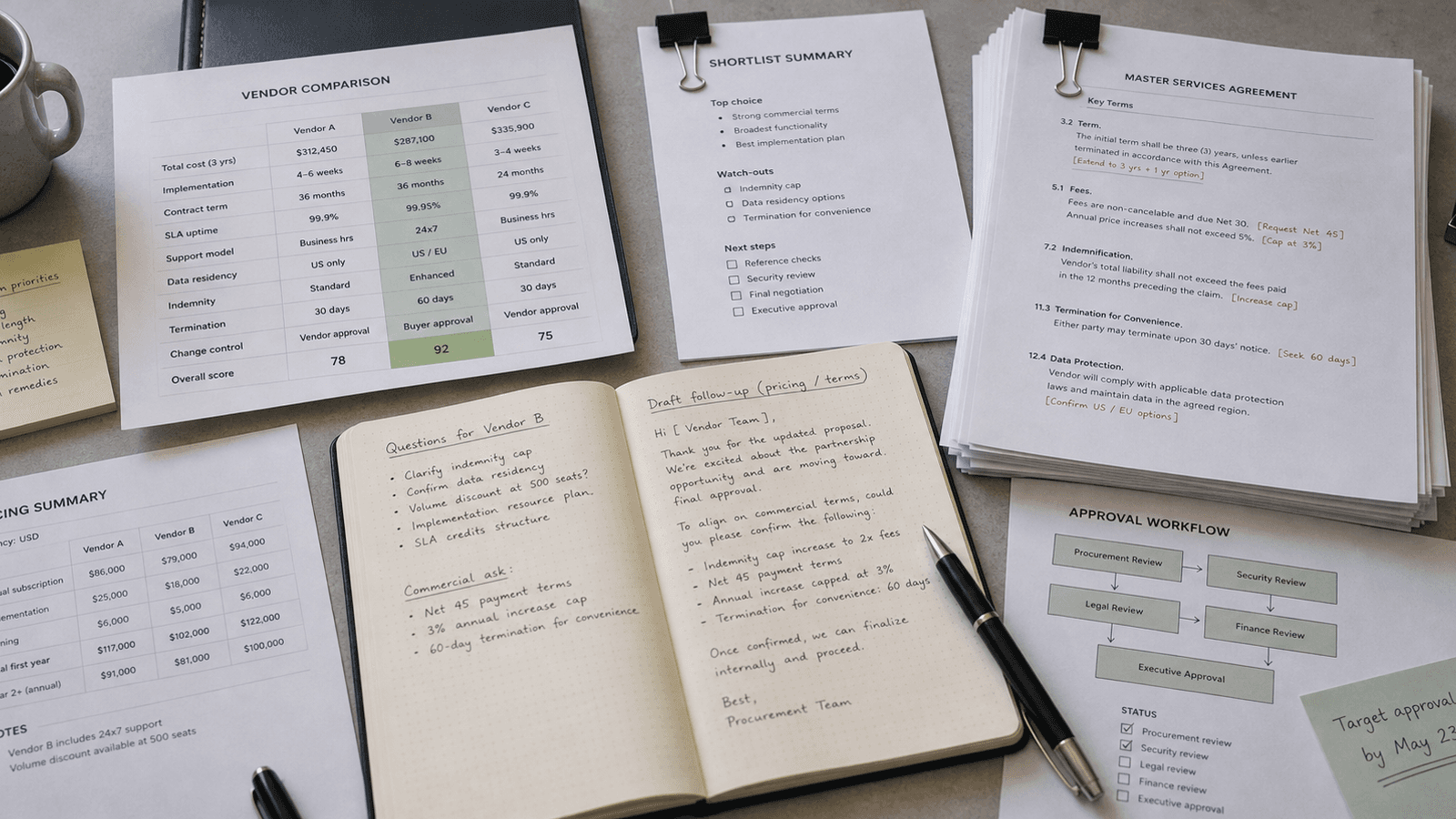
Procurement teams keep getting pitched AI at the research and analysis layer.
Find suppliers faster. Summarize proposals. Compare vendors. Surface savings opportunities. Generate an RFP.
Some of that is useful.
It is also not where a lot of procurement friction actually lives.
The harder part is often the writing around the decision.
The vendor follow-up that has to be firm without creating friction. The internal note that explains why a cheaper option is still the riskier one. The request for revised terms that should be precise without sounding adversarial. The Slack message that gets legal, finance, and the budget owner aligned on the same next step. The renewal email that needs urgency without sounding chaotic.
That is why procurement teams often need AI autocomplete more than AI sourcing copilots.
The visible work is vendor selection. The daily work is sentence selection.
From the outside, procurement can look like evaluation and negotiation at the big-document level.
RFPs. Scorecards. Vendor reviews. Contract terms. Savings analysis.
Those matter.
But a lot of the weekly writing load is smaller and more constant:
vendor follow-ups
renewal questions
pricing clarification
internal approval notes
risk summaries
change requests
cross-functional handoffs
contract-status updates
meeting recaps
escalation messages
This writing rarely looks glamorous. It still decides how quickly the work moves.
Procurement writing is rarely about invention
Most procurement professionals do not struggle because they cannot think of what to say.
They usually know the point:
ask for the concession
clarify the term
explain the risk
move the approval forward
document the decision cleanly
The friction is landing the sentence correctly.
Should this sound firmer? Does this wording create unnecessary defensiveness? Is this precise enough for legal? Does this summary help finance decide quickly? Did this note make the tradeoff clear, or just longer?
That is not a blank-page problem. It is a judgment-and-phrasing problem.
A lot of procurement risk lives in small wording choices
Procurement work is full of moments where one sentence quietly changes the outcome.
A vague request can slow a vendor reply by two days. A sloppy internal summary can force another approval loop. A rushed note can make a reasonable ask sound more aggressive than intended. A soft escalation can get ignored. A hard one can damage leverage.
This is why procurement writing is more strategic than it looks.
The job is not only getting information from one system to another. It is reducing ambiguity while protecting relationships and keeping the process moving.
That takes sentence-level control.
Why sourcing copilots do not solve the writing between the systems
AI sourcing tools are built around the visible artifacts:
supplier discovery
bid comparison
market scanning
proposal analysis
intake automation
Those can help at the top of the funnel.
But procurement work usually slows down later.
After the shortlist. After the call. After the pricing comes back. After the legal comment. After someone says, "Can you send one clean summary before we decide?"
That is where the writing starts to matter more than the analysis.
You are no longer asking a tool to generate a list. You are trying to send the sentence that gets the next decision unstuck.
The real workflow lives across apps
Procurement writing does not stay inside one procurement system.
It moves through email, Slack, docs, spreadsheets, contract comments, intake tools, ticketing systems, browser forms, and internal notes all day.
That matters because workflow shape matters.
If the AI help only works in one dedicated window, the team still has to break flow every time they want help with a sentence:
open another tool
restate the situation
paste the latest version
review a longer rewrite
trim it back down
paste it where it belongs
That is clumsy when the real job is moving dozens of small, high-context messages forward across the day.
Autocomplete fits better because the help appears where the writing is already happening.
The vendor email. The internal approval note. The Slack update. The comment on the redlined term.
Control matters because procurement writing carries accountability
Procurement teams are not just trying to move faster. They are trying to stay accurate while multiple stakeholders rely on what they write.
That changes the standard for AI help.
The goal is not a polished paragraph from nowhere. The goal is a better sentence that still belongs to the person responsible for it.
This matters because procurement messages often represent more than one concern at once:
budget discipline
legal caution
vendor relationship management
timing pressure
internal alignment
That mix is hard to outsource cleanly.
Generation-first AI can make the message look finished before it is actually safe to send. Now someone has to review the machine's language line by line and edit it back into something the team can stand behind.
Autocomplete is narrower. That is exactly why it can feel safer.
You keep the intent. You keep the judgment. You accept what helps and ignore what does not.
Better AI help for procurement should feel quiet
The most useful tool for procurement is not the one with the biggest demo. It is the one that makes the daily writing easier:
a cleaner vendor follow-up
a sharper approval summary
a calmer escalation
a more precise renewal question
a faster internal handoff
That kind of help compounds because procurement work is repetitive without being generic. The pattern repeats. The wording still matters every time.
That is why AI autocomplete is such a strong fit for procurement teams. It helps with the writing between the systems, which is often where deals either keep moving or quietly stall.
If you want AI writing help that fits the actual shape of procurement work, try Typeahead. It works across the apps where procurement teams already write on their Mac, runs locally, and helps the sentence move faster without taking judgment away from the person writing it.