Why people who dislike AI writing still warm up to AI autocomplete
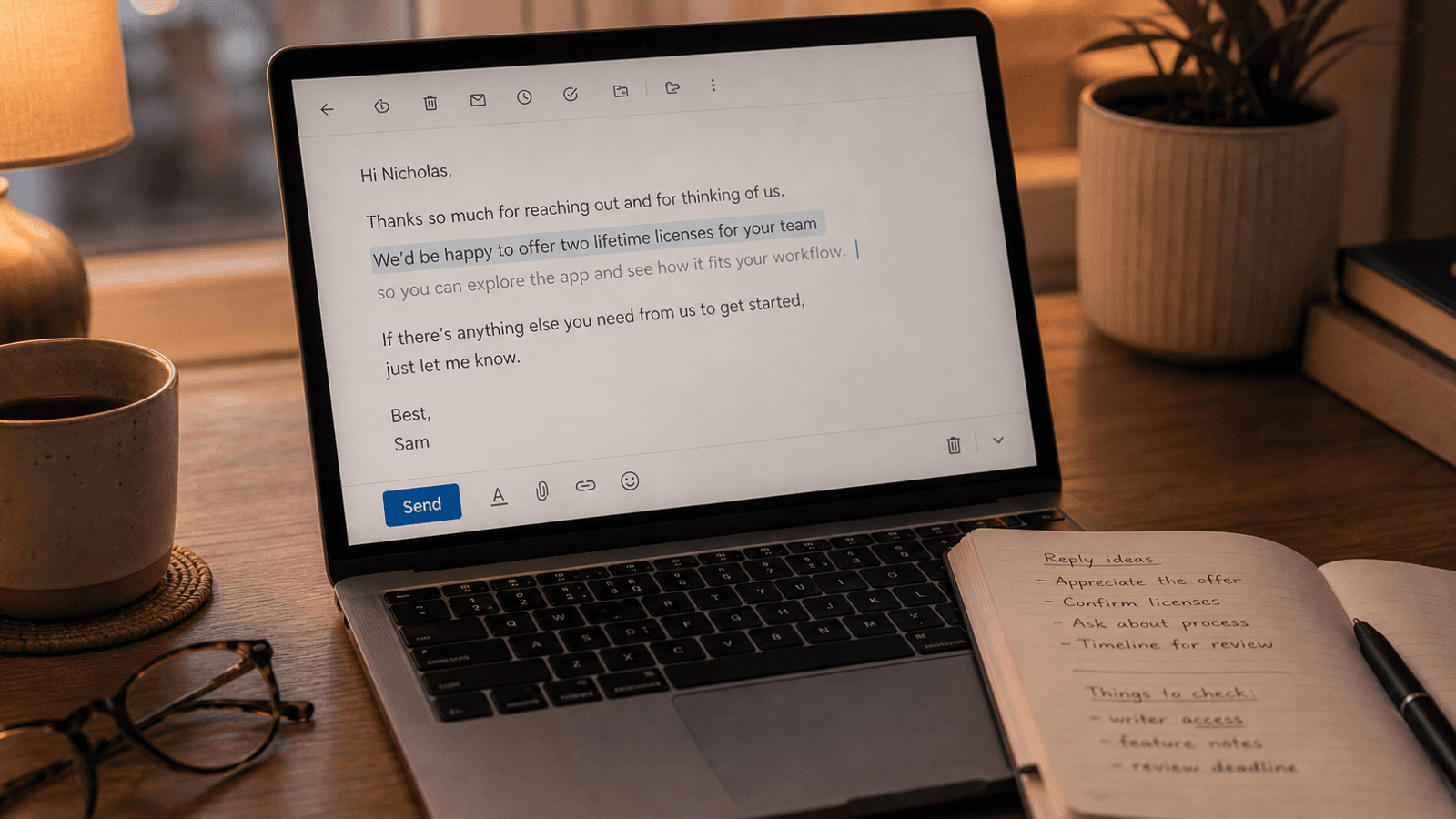
A lot of people are not excited about AI writing.
That skepticism is reasonable.
They have seen the same problems everyone else has:
- text that sounds polished but generic
- tools that make bold claims about saving time
- output that creates as much editing work as it removes
- software that quietly tries to become the loudest voice in the sentence
So when those same people end up liking AI autocomplete, it can seem inconsistent at first.
It is not.
They are reacting to a different kind of tool.
Most objections are really objections to delegation
When people say they dislike AI writing, they usually do not mean they hate all assistance.
They mean they dislike the feeling of handing the message away.
That feeling shows up when the workflow looks like this:
1. Stop writing 2. Explain the situation to a tool 3. Get a paragraph back 4. Edit the paragraph until it sounds like you 5. Paste it where the writing actually belongs
Even when the result is useful, the interaction can feel off.
The tool is not just helping. It is taking a first pass at the communication itself.
Now you are reviewing somebody else's judgment before you can send your own message.
That is the part many people dislike.
Autocomplete feels different because the writer stays inside the sentence
AI autocomplete changes the shape of the interaction.
You do not leave the app. You do not ask for a draft. You do not wait for a block of prose that needs cleanup.
You start typing. The suggestion appears inline. If it matches your intent, you accept it. If it does not, you ignore it and keep moving.
That sounds like a small UX difference. It is actually a different relationship to the writing.
The writer is still steering. The AI is helping with momentum, not authorship.
The control is practical, not ideological
People often talk about control in abstract AI terms.
But in writing tools, control is not mainly a philosophy. It is a feeling you get from the interface.
Can you reject the suggestion instantly? Can you take only part of it? Can you keep your train of thought without switching contexts? Can the tool stay quiet when it is wrong?
Those details matter more than a big promise on a landing page.
Many people who dislike AI writing are really reacting to tools that create too much ceremony around help. They do not want to manage an assistant. They want to finish the sentence.
Autocomplete is often easier to accept because it respects that.
Small writing moments are where opinions about AI get tested
The strongest opinions about AI writing rarely come from formal drafts.
They come from ordinary work.
- the Slack reply that should be clear without sounding sharp
- the follow-up email you want to send before the context fades
- the note in a doc while the meeting is still fresh
- the browser text box that somehow still needs careful wording
These are not glamorous writing moments. They are where people actually feel the cost of clumsy tools.
If the help is too heavy, they skip it. If the output sounds fake, they delete it. If the workflow breaks concentration, they resent it.
That is why autocomplete often wins over skeptical users. It is lightweight enough to survive contact with the real writing day.
The best AI writing help should be easy to distrust in the moment
This may sound backwards, but it matters.
A tool becomes easier to trust when it is easy to reject.
If a suggestion is weak, you should be able to move past it instantly. If a phrase is wrong, you should not have to undo a whole draft. If the tone is off, you should not need a mini editing session to recover your own voice.
That reversibility is part of why autocomplete feels safer than generation-first tools.
It keeps the cost of a bad suggestion low. And when the cost of being wrong is low, people are more willing to let the tool be present at all.
This is also why "anti-AI" users are not always anti-help
A lot of people labeled as anti-AI are actually anti-slop.
They do not want:
- generic phrasing
- machine-polished tone
- another tab to supervise
- a tool that turns every message into a content exercise
But they may still want less drag between thought and text.
They may still appreciate a suggestion that saves a few seconds. They may still like help that appears where they already write instead of demanding a new workflow. That same sentence-level control is useful after you dictate a rough opening, as these seven dictation and autocomplete writing jobs show.
In other words, they are not rejecting assistance. They are rejecting outsourcing.
That is a useful distinction.
Why this matters for Typeahead
Typeahead is an AI autocomplete app for Mac that works across the apps where you already write.
It runs locally on your Mac. Suggestions appear inline while you type. You can accept the full suggestion, take it word by word, or ignore it completely.
That interaction model is why Typeahead can make sense even to people who are cold on AI writing tools in general.
It does not ask you to become a prompt manager. It does not ask you to paste machine text back into your own work. It helps at the sentence level, inside the app you are already in, while keeping you as the person doing the writing.
That is a narrower promise than "AI will write for you."
It is also a more believable one.
Sometimes the people who dislike AI writing are the best test of whether an AI writing product actually respects the writer.