Why operations teams need AI autocomplete more than AI workflow builders
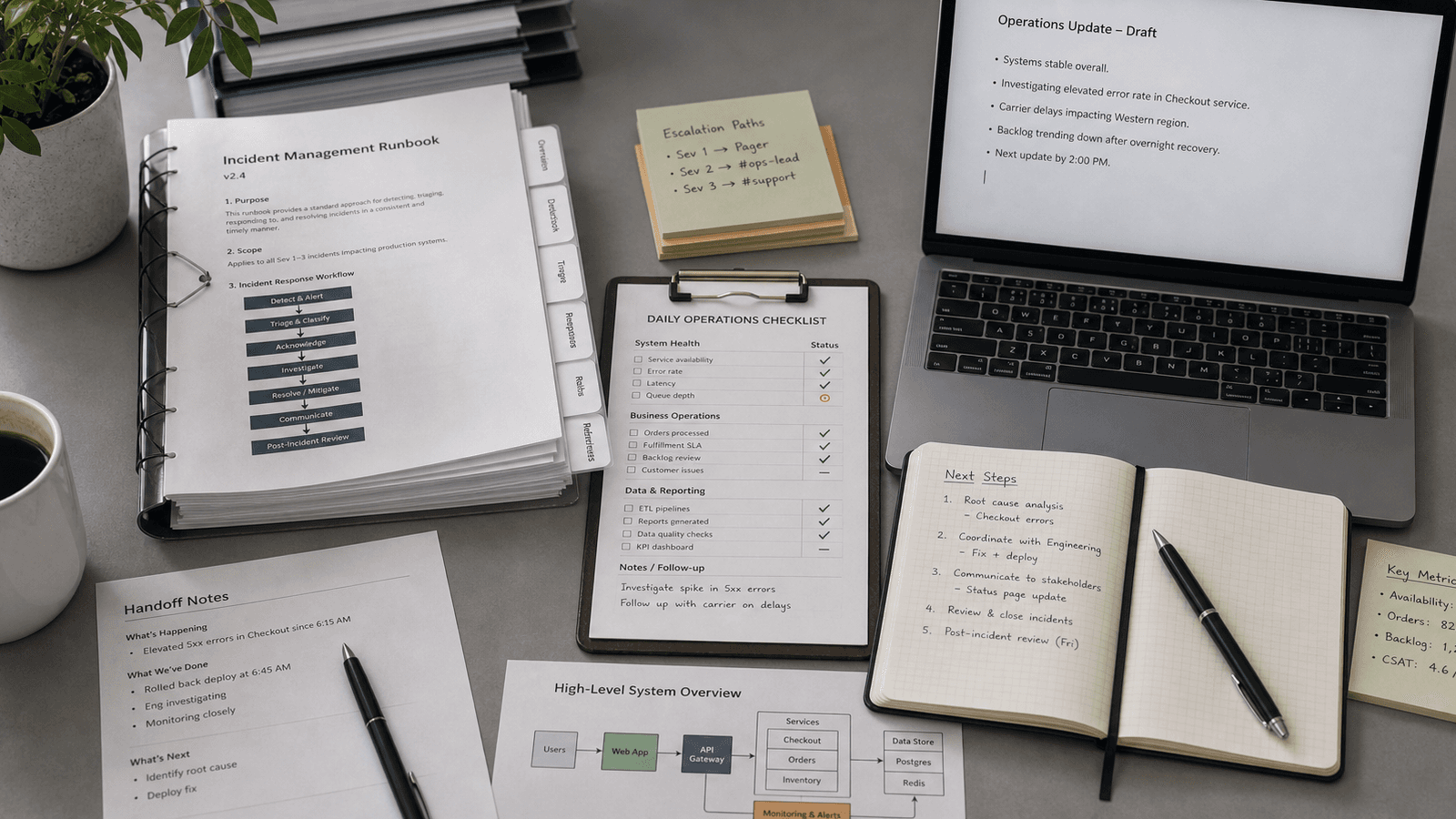
Operations teams get sold AI at the systems layer.
Automate the workflow. Route the request. Generate the SOP. Summarize the ticket queue. Build the internal agent.
Some of that is useful.
It is also not where a lot of day-to-day operations friction actually lives.
The harder work is often the writing between the systems.
The Slack message that clarifies what changed. The handoff note that keeps a process from breaking. The update that tells a team what to do next without creating confusion. The internal doc sentence that turns a messy exception into a repeatable rule. The follow-up that gets an answer without sounding like escalation.
That is why operations teams often need AI autocomplete more than another AI workflow builder.
Operations work runs on small, precise writing
When people think about operations, they usually picture systems, dashboards, and process maps.
That is part of the job.
But operations is also a writing-heavy function in disguise.
A lot of the real work shows up in:
Slack updates
internal docs
SOP edits
ticket comments
project notes
vendor follow-ups
onboarding instructions
exception handling
approval requests
This writing usually does not look important from the outside. It is often short. It is often buried inside another tool. It is often written quickly between other tasks.
It still determines whether work moves cleanly or keeps bouncing around.
The bottleneck is usually clarity, not automation
Many operations problems do not start with missing software. They start with ambiguous language.
Who owns this now? What changed? What is blocked? What should happen if the normal process does not apply? Is this urgent, optional, or just helpful context?
A workflow builder can help once the process is already stable enough to encode.
But before that, someone has to write the sentence that makes the process legible to everyone else.
That is usually the real bottleneck.
Not the automation itself. The clarity required before automation is even possible.
Workflow tools help the system. Autocomplete helps the operator.
This is the difference that matters.
Workflow software is trying to improve the machine around the team.
Autocomplete is helping the person inside the workday finish the sentence faster while they still own the judgment.
That matters in operations because the writing is constant and context-sensitive.
A process update in Notion needs a different tone than a vendor email. A Slack clarification needs a different level of urgency than an internal ticket comment. A policy note needs to be specific without becoming bloated.
These are not blank-page problems. They are sentence-shaping problems.
Most of the time, the operator already knows what needs to happen. They just need to say it clearly, quickly, and in the right app.
The real operations day lives across apps
Operations work rarely stays in one tool.
You move between:
Slack for coordination
Notion or Google Docs for process documentation
Airtable, Linear, Asana, or Jira for tracking
email for vendors and external follow-ups
internal admin tools for requests and notes
calendar invites and meeting agendas
That across-app movement is exactly where a lot of AI tools fall apart.
They help in one surface and disappear in the next one.
That creates a familiar problem: the places where writing matters most are often the places where the AI is missing.
Autocomplete works better because it follows the writing itself.
The process note. The follow-up sentence. The request for missing input. The quick explanation that keeps a teammate from doing the wrong thing.
Those are the small moments that make operations feel smooth or chaotic.
The best operations writing help should not add another workflow
Operations teams do not usually need more complexity.
They already live inside enough systems.
The last thing they need is another separate AI step:
Open a chat window. Explain the situation. Read three versions. Copy one back. Edit it so it sounds like the team.
That is not reducing friction. That is adding a new layer to the friction.
The better model is lighter.
You start the sentence. The suggestion appears inline. You accept it if it fits. You ignore it if it does not.
That keeps the operator in control. It also keeps the work moving.
Good operations writing is invisible when it works
That is part of why this category gets missed.
Nobody celebrates the sentence that prevented confusion. Nobody notices the follow-up that saved a task from stalling. Nobody writes a case study about the SOP line that made the edge case obvious.
But those are exactly the writing moments that compound over a week.
Operations excellence often looks like fewer dropped balls, fewer repeated questions, and fewer unnecessary clarifications.
A lot of that comes down to better sentence-level execution across the apps where the work is already happening.
That is where AI autocomplete makes sense.
Not as a system that tries to replace the operator. As a quiet layer that helps the operator move faster without giving up clarity.
If you want AI writing help that fits the real shape of operations work, try Typeahead. It works across the apps where operations teams already write on their Mac, stays inside the sentence, and helps keep the day moving.