Why nonprofit teams need AI autocomplete more than AI grant generators
Nonprofit teams keep getting pitched AI at the biggest-document layer.
Generate the grant proposal. Draft the fundraising email. Write the campaign page. Turn notes into a donor update.
Some of that is useful.
It is also not where a lot of nonprofit writing friction actually lives.
The harder part is often the smaller writing around the mission work.
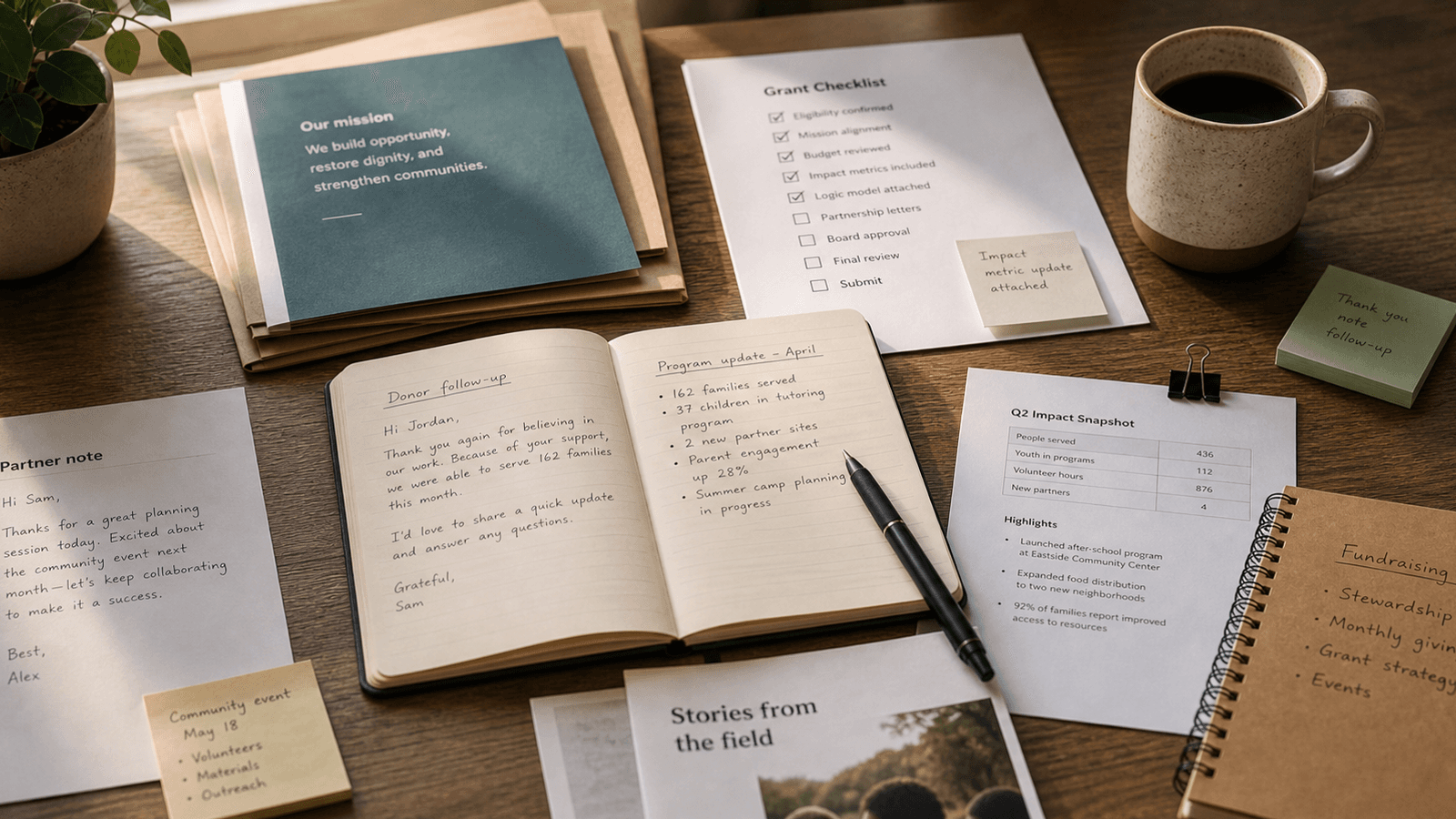
The donor follow-up that has to feel personal without becoming slow. The internal Slack message that clarifies next steps after an event. The partner email that needs warmth, precision, and a clear ask. The board update that should sound confident without sounding inflated. The grant sentence that needs to be specific before it can be persuasive.
That is why nonprofit teams often need AI autocomplete more than another AI grant generator.
The real writing day is not only proposals and campaigns
From the outside, nonprofit writing can look like a handful of major artifacts.
Grant applications. Fundraising campaigns. Annual reports. Program pages. Board decks.
Those matter.
But most of the weekly writing load is more scattered than that.
It shows up in:
donor follow-ups
event coordination
volunteer communication
partner outreach
internal handoffs
board notes
program updates
campaign revisions
thank-you messages
quick context-setting emails
This writing is constant. It is usually short. It often happens under time pressure. And it carries more relational weight than people first assume.
The hard part is not inventing the message
Most nonprofit teams do not struggle because they have nothing to say.
They usually know the purpose. They know the audience. They know what needs to happen next.
The friction is landing the sentence well.
Should this sound warmer? More direct? More urgent? How much mission language is enough before it starts to sound generic? How much context does this donor need? Does this follow-up sound personal or mass-produced?
Those are judgment questions.
A grant generator can help produce a formal draft. It is much less useful when the job is shaping a sentence that has to sound human, specific, and respectful of the relationship.
That sentence work is where a lot of nonprofit communication actually lives.
Small messages carry real fundraising and trust weight
Nonprofit work depends on relationships.
That means a lot of leverage sits in writing that barely looks like writing work:
a two-line donor follow-up
a volunteer reminder
a partner check-in
a board clarification
a campaign handoff note
None of these are giant content projects. They still shape responsiveness, trust, and how clearly the organization operates.
One sentence can make an ask feel thoughtful or transactional. One edit can make a thank-you note feel specific instead of templated. One unclear internal message can create extra work for three people downstream.
That is why sentence-level help often matters more than another generator focused on the largest document in the room.
Grant generators solve the visible part of the job
A grant proposal is visible. It is important. It is also not the only place where nonprofit teams need writing help.
Most of the writing load happens before and after the formal document.
Before:
gathering context
aligning on the story
tightening the ask
clarifying impact language
After:
answering follow-up questions
sending donor updates
coordinating across the team
confirming next steps
turning one big message into dozens of smaller ones across apps
That is where the daily friction sits.
A tool that helps generate the big artifact can still miss the writing that actually fills the week.
The real work lives across apps
Nonprofit teams do not write in one clean, dedicated workflow.
They move between email, Slack, docs, forms, project boards, calendar notes, donor systems, and browser tabs all day.
That matters because workflow shape matters.
If the AI help only works in one product, it misses a lot of the writing. If it asks the team to open a separate chat every time they want help with a sentence, it adds ceremony to work that already moves fast.
Autocomplete fits better because it appears where the writing is already happening.
The donor note. The event follow-up. The board update. The internal handoff.
The writing keeps moving without asking the team to leave the flow of the day.
Control matters because the mission already has a voice
This is the part a lot of AI demos skip.
Nonprofit teams are not just trying to write faster. They are trying to sound like themselves while representing a cause people care about.
How much emotion is right here? How concrete should this ask be? How much urgency is motivating, and how much starts to feel manipulative? Does this sound like the organization, or just like polished AI language?
That is why generation-first tools can feel risky in nonprofit work. They can sound smooth before they sound true.
Autocomplete is a better fit because the team stays in charge. You start the sentence. You choose the direction. You accept the suggestion if it helps. You ignore it if it does not.
That keeps the judgment with the people who understand the mission, the donor, and the moment.
Better AI help for nonprofits should feel quiet
The most useful tool here is not the one with the flashiest demo.
It is the one that makes everyday communication lighter:
a clearer donor follow-up
a faster board note
a warmer volunteer message
a sharper internal handoff
a more specific campaign sentence
That kind of help compounds because nonprofit work runs on repetition with nuance. The message changes. The relationship matters every time.
That is why AI autocomplete is such a strong fit for nonprofit teams. It helps with the writing around the mission work, which is often where trust, clarity, and momentum are either built or lost.
If you want AI writing help that fits the actual shape of nonprofit work, try Typeahead. It works across the apps where nonprofit teams already write on their Mac, runs locally, and helps the sentence move faster without taking the judgment away from the person writing it.