Why lawyers need AI autocomplete more than AI contract review
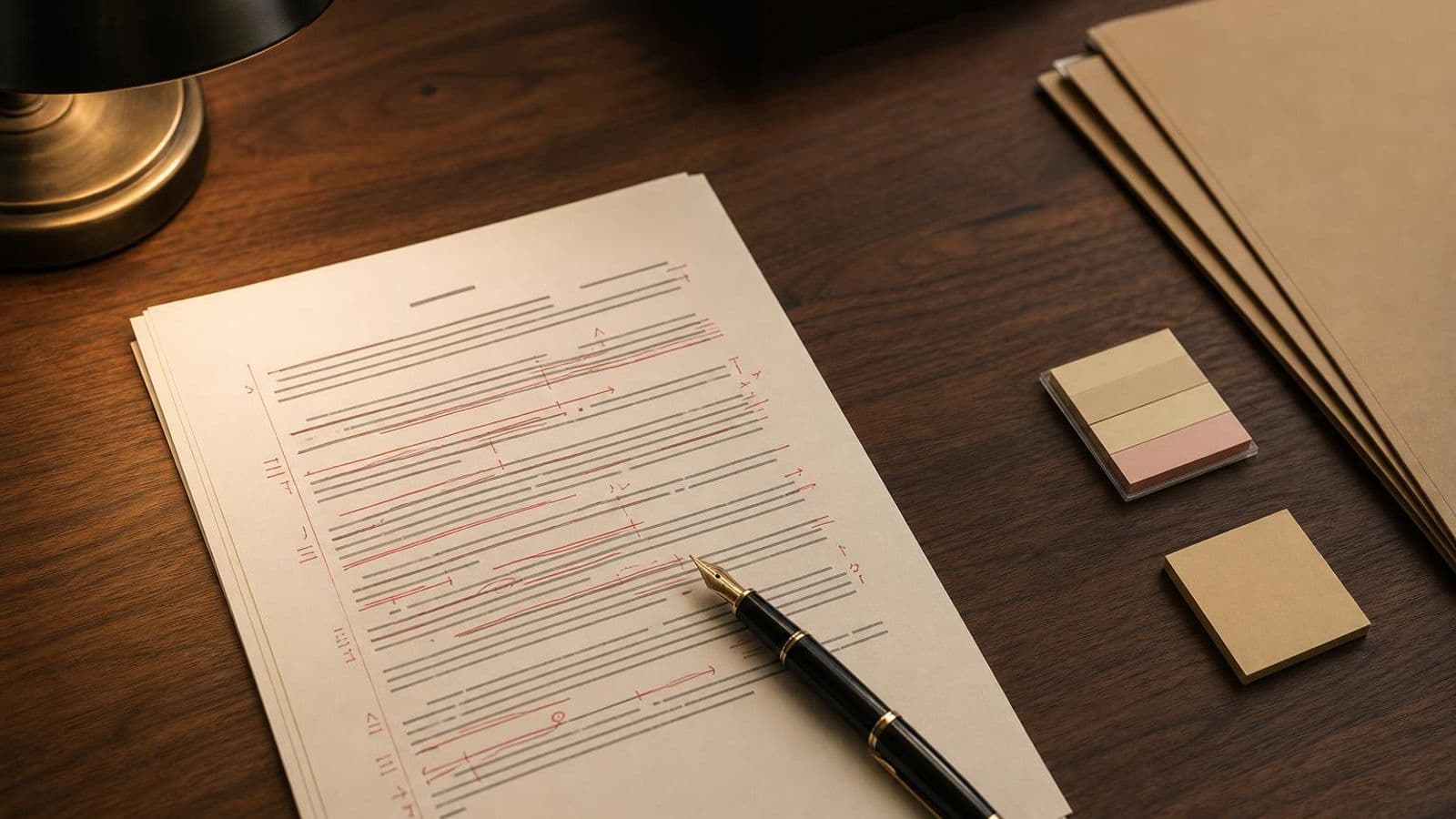
Lawyers are getting pitched AI for the most dramatic-looking parts of the job.
Review the contract. Spot the risks. Summarize the case. Pull out the clauses.
Some of that is useful. It is also not where a lot of legal writing friction actually lives.
The daily burden is often smaller, faster and more constant than those demos suggest.
An email to a client that needs to be clear without sounding casual. A follow-up to opposing counsel that has to stay firm without becoming sloppy. A note inside a draft agreement. A short internal message about what changed. A sentence that narrows a risk without overstating it.
That is where AI autocomplete can be a better fit than contract-review-first tools. It helps in the layer of legal writing that happens all day, across apps, while the lawyer is still the one deciding what the sentence should mean.
Legal work creates a lot more writing than most AI demos acknowledge
When people imagine legal AI, they usually picture a large artifact.
A brief. A contract. A research memo. A pile of documents going through a review system.
That work matters. It is just not the whole writing day.
Lawyers also spend an enormous amount of time on smaller writing that keeps matters moving:
client emails
internal notes
follow-ups after calls
comments in drafts
status updates
clarifying questions
issue summaries
negotiation language
Those pieces are not glamorous enough to headline an AI product demo. They are still where hours disappear.
And unlike formal drafting, they happen in many different places: Mail, Slack, Word, Google Docs, browser text fields, case software, notes apps.
That is exactly why system-wide autocomplete is interesting. The help shows up where the writing is already happening instead of asking the lawyer to move the work into a separate AI ritual.
Contract review helps with analysis. Lawyers still need help with phrasing.
Contract review tools are built for a real job. They help identify patterns, surface terms, and speed up analysis on larger documents.
But a lot of legal drag comes later, in the sentence-by-sentence communication around that analysis.
How do you explain the issue to a client without sounding alarmist? How do you ask for a revision cleanly? How do you summarize what changed in a way that is fast to read and hard to misread? How do you push a point forward without creating unnecessary heat?
Those are phrasing problems. They are judgment-heavy. They are usually too small to justify opening a separate chat window and reconstructing the context from scratch.
Most lawyers do not need a machine to decide the position for them. They need less friction turning the position they already hold into usable text.
That is where inline AI help fits better.
Legal writing benefits from control, not just speed
This matters more in law than in many other fields.
Legal writing is not only about getting words onto the page. It is about precision, tone and accountability.
One sentence can soften a demand, sharpen a risk, narrow an obligation or create ambiguity that did not need to exist.
That makes full-message generation feel risky for a lot of lawyers, even when the output sounds competent at first glance.
The issue is not that lawyers hate speed. The issue is that they need control over what is being said.
Autocomplete is a narrower form of help. You start the sentence. The suggestion appears inline. You accept it if it matches your intent. You ignore it if it does not.
That interaction model matters. It keeps the lawyer in charge of meaning instead of turning the job into editing a machine's paragraph after the fact.
The better legal AI workflow is the one that does not ask for another workflow
A lot of AI products quietly add process to work that is already under time pressure.
Open a tool. Paste the text. Explain what you want. Wait for output. Review the answer. Move it back into the place where the real work lives.
For large tasks, maybe that trade is worth it.
For everyday legal writing, it often is not.
The email was supposed to take thirty seconds. The note was supposed to keep momentum. The comment in the document was only meant to preserve a thought before the meeting starts.
Those are exactly the moments where a separate AI workflow feels heavier than the task itself.
Autocomplete works differently. It stays inside the existing workflow. The lawyer keeps typing in the app that is already open. The help is there if it fits. Gone if it does not.
That is a better match for how legal writing is actually distributed through the day.
For lawyers, privacy is important. Fit is just as important.
Privacy is the obvious legal AI concern, and it should be. If a writing tool sends sensitive text to the cloud, that raises real issues.
But privacy is only part of the story.
Even a perfectly private AI tool can still be awkward if it interrupts the way legal work actually happens.
The strongest fit is local and inline:
local, because sensitive writing should stay on the device
inline, because legal writing is constant and high-context
system-wide, because the work spans more than one app
optional, because the lawyer has to stay responsible for the meaning
That combination is much closer to the real shape of the job than the usual "upload a document and wait for magic" model.
The legal writing bottleneck is often not the brief. It is everything around it.
Big legal documents matter. So do the hundreds of smaller sentences that move a matter forward before and after those documents exist.
That is why lawyers may get more day-to-day value from AI autocomplete than from yet another AI review surface.
Not because review tools are useless. Because the constant writing load is broader than review.
The real opportunity is not replacing legal judgment. It is reducing the friction around expressing that judgment clearly, quickly and in the lawyer's own words.
That is a much better job for autocomplete.