Why internal communications teams need AI autocomplete more than AI announcement generators
Internal communications work can look simple from the outside.
Write the announcement. Send the note. Post the update. Move on.
That is not how the job actually feels.
A lot of internal comms work is not about producing one polished artifact. It is about carrying the same message carefully across many smaller writing moments without losing trust, clarity, or tone.
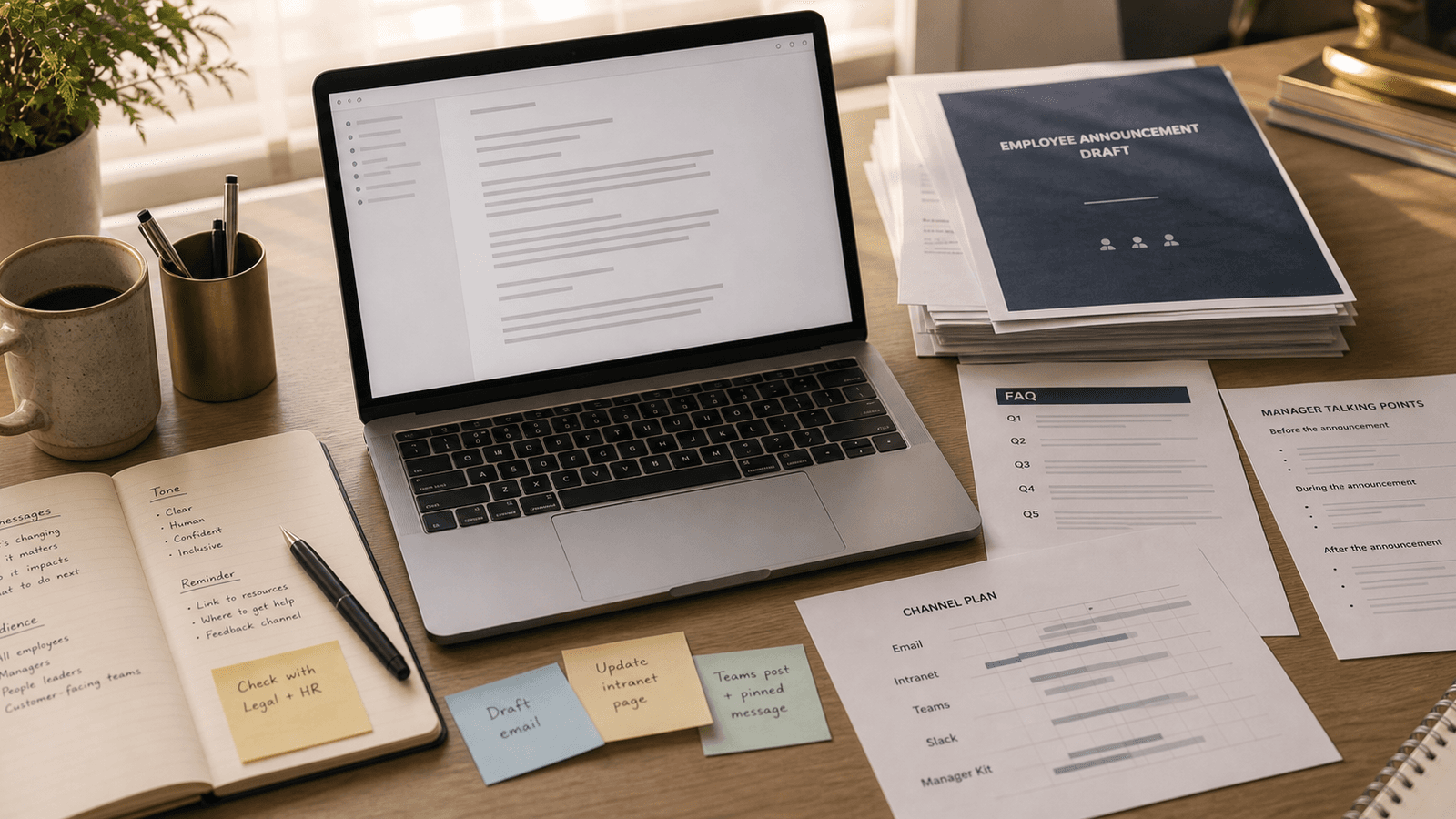
The all-hands note. The manager talking points. The Slack follow-up after the announcement lands. The FAQ answer when the first confused reply comes in. The quieter clarification sent to one team because the first version left room for interpretation.
That is why AI autocomplete often fits internal communications better than another AI tool that promises to generate the announcement for you.
The hard part is rarely the first draft
Internal comms teams usually know the message.
They know what changed. They know what leadership wants to say. They know what employees will worry about. They know which line will be screenshotted if the wording is careless.
The challenge is not inventing a message from nothing. It is translating the same message across formats, audiences, and levels of sensitivity without letting it become robotic or vague.
That work shows up everywhere:
leadership announcements
org change notes
launch updates
policy rollouts
manager guidance
FAQ responses
follow-up clarifications in Slack
comments inside draft docs
short status notes that need to sound calm and precise
None of that is blank-page writing for long. Most of it is sentence-level judgment under time pressure.
Announcement generators solve the most visible part of the work
AI writing tools tend to focus on the dramatic moment.
Generate the memo. Draft the announcement. Summarize the policy. Turn the leadership input into a polished note.
That can be useful for getting a rough shape on the page. It is usually not the part of the job where internal comms teams spend the most care.
The real difficulty starts after the first pass.
Does this sentence sound direct or cold? Is this line too corporate for a tense situation? Will this phrasing create false certainty? Does the manager note match the company-wide note closely enough? Will the Slack follow-up sound evasive if it is shorter than the email?
Those are not generation problems. They are alignment problems.
And when a model writes the whole thing first, internal comms often inherits a second job: editing machine-polished language back into something people inside the company will actually trust.
Internal comms writing is high-trust writing
This is what makes the category different.
Employees are not only reading for information. They are reading for intent.
They notice:
what is explicit
what gets softened
what sounds overly legal
what feels performative
what changed between versions
what leaders seem willing to say plainly
In other words, internal comms is not mainly a content volume problem. It is a trust calibration problem.
That is one reason generated announcements can feel impressive in a demo but awkward in real use. They often sound finished before they sound true.
For a public marketing post, that can be tolerable. For an internal note about compensation, restructuring, policy shifts, deadlines, or expectations, it usually is not.
The real writing load spreads across apps
Internal comms does not live in one perfect drafting environment.
The work moves across apps all day:
docs for the main draft
Slack for live clarifications
email for formal delivery
notes for talking points
comments for review cycles
project tools for rollout steps
browser fields for intranet or HR system updates
That matters because chat-style AI turns each small writing task into a separate ceremony.
Open the tool. Explain the situation. Read the output. Edit it. Paste it back.
That might be acceptable once. It is clumsy when the same announcement has to keep getting translated into smaller messages across the rest of the day.
Autocomplete fits better because the help appears where the writing already lives. You keep the draft context. You keep the surrounding discussion. You keep the exact wording you are trying not to drift away from.
Internal comms usually needs continuity more than invention
A lot of internal writing already has direction.
What slows people down is continuity.
Keeping the tone stable from the email to the manager note. Keeping the short Slack version aligned with the longer explanation. Keeping the follow-up human without improvising a new position. Keeping the phrasing calm enough that people do not overread it.
That is a better fit for inline help than for full-message generation.
You start with the wording you actually mean. The suggestion appears inline. If it supports the sentence, you take it. If it drifts, you ignore it and keep going.
That sounds like a smaller promise than "AI will write the announcement."
It is also closer to the real shape of the job.
Small internal messages carry outsized risk
People often underestimate the smaller writing around a big update.
The main note gets reviewed carefully. The small replies around it often shape how the message is actually received.
Think about:
the answer to the first skeptical Slack reply
the line a manager copies into their team channel
the follow-up explaining what is changing now versus later
the short acknowledgement sent to someone frustrated by the decision
the FAQ sentence that keeps one ambiguous point from spreading
Those are not moments where most teams want a machine to suddenly become the loudest voice in the sentence.
They want help moving faster while the judgment stays human.
That is why lighter-weight writing assistance often beats bigger generation tools here.
Better help should preserve responsibility
Internal comms teams are accountable for how the message lands.
That means the useful AI is not the one that creates the biggest draft. It is the one that makes it easier to stay clear, consistent, and in control.
The best support usually looks like:
less typing drag during review rounds
faster follow-ups while the context is fresh
easier sentence completion in high-attention moments
fewer awkward detours into a separate AI workflow
less cleanup from overly polished machine language
This is especially important when the writing is sensitive.
If the tool makes the message sound generic, the team loses time editing. If it makes the message sound overconfident, the team loses trust. If it breaks the rhythm of the rollout, the team loses speed when speed matters most.
Why this shape fits Typeahead
Typeahead is an AI autocomplete app for Mac that works across the apps where you already write.
It runs locally on your Mac. Suggestions appear inline while you type. You can accept the full suggestion, take it word by word, or ignore it completely.
That makes it a strong fit for internal communications.
It helps with the real writing layer of the work: the announcement revisions, the manager notes, the Slack clarifications, the FAQ answers, and the small high-context sentences that determine whether an internal message feels steady or evasive.
You stay in control of the message. You stay in control of the tone. The AI helps with momentum, not accountability.
For internal comms teams, that is often more useful than another announcement generator that can produce a polished first pass but cannot carry the message cleanly across the dozens of smaller writing moments that follow.