Why compliance teams need AI autocomplete more than AI policy generators
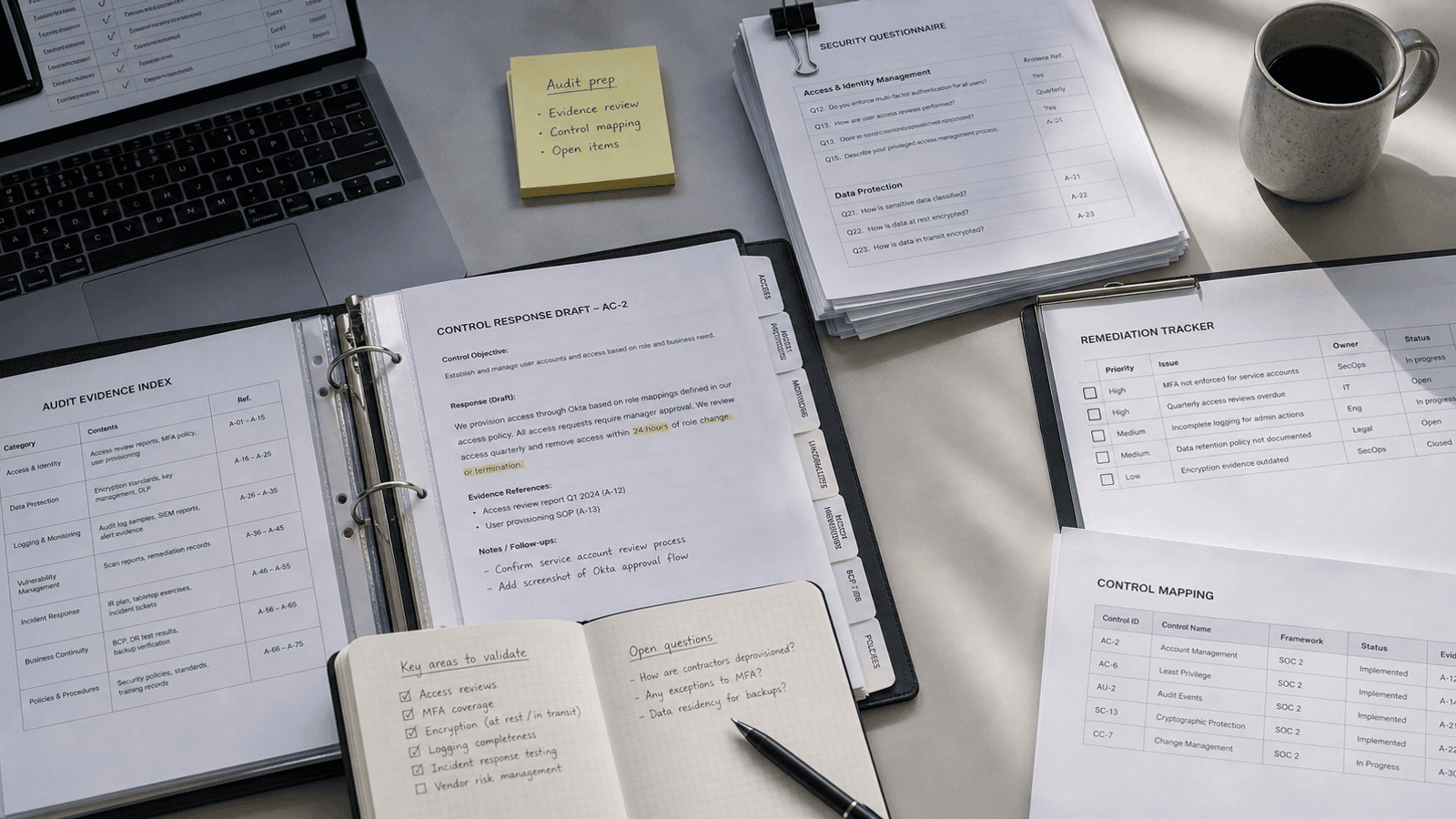
Compliance teams do not spend most of their time inventing policies from scratch.
They spend a lot of their time writing around the policy.
The note that explains why a control exists. The answer to a customer security questionnaire. The comment that tightens a risky phrase before legal reviews it. The follow-up after an internal audit. The message that asks another team to fix something without turning the request into a fight.
That is why compliance teams often need AI autocomplete more than AI policy generators.
The visible artifact is the policy. The daily work is the explanation.
When people picture compliance work, they often picture:
policy documents
audit frameworks
control libraries
risk registers
certifications
All of that matters.
But a lot of the real friction shows up in the smaller writing that sits around those systems:
clarifying what a control actually means in practice
answering a prospect's security question without drifting from what is true
explaining a remediation request to an internal owner
documenting why an exception was granted
summarizing what changed after a review
That writing is not a side task. It is how compliance becomes understandable enough for other people to follow.
Compliance writing is usually not a blank-page problem
Most compliance professionals already know the underlying answer.
The control exists or it does not. The evidence is sufficient or it is not. The exception is justified or it is not. The customer can be told yes, no, or not yet.
The hard part is turning that reality into wording that is precise, calm, and usable.
Should this answer be more direct? Does this phrase imply a guarantee we should not make? Is this explanation too technical for a customer team? Does this remediation note sound accusatory? Is this concise enough for the questionnaire and still accurate enough for audit trail purposes?
That is a sentence-level problem.
Small wording choices carry real risk
Compliance writing is full of lines that look minor from the outside and matter a lot in practice.
One loose sentence can overstate a control. One vague answer can create more back-and-forth with a customer. One defensive note can make an internal review harder than it needs to be. One sloppy explanation can force legal, security, or procurement to clean up avoidable ambiguity.
That is why compliance teams care so much about language discipline.
The job is not only to be correct. It is to be correct in a way that other people can rely on.
That reliability often lives in short explanations, comments, responses, and follow-ups spread across the day.
Why policy-generation AI misses the harder layer
A lot of AI for compliance aims at the biggest artifact.
Generate a policy. Draft the control description. Produce a template. Summarize the framework requirement.
Some of that can help.
But compliance teams are often not slowed down by a total absence of policy text. They are slowed down by the writing around the policy:
the customer questionnaire answer that needs to stay accurate
the internal note that requests evidence without sounding vague
the explanation under a control that makes it easier for another team to comply
the exception summary that needs to be honest without being messy
the audit follow-up that turns findings into concrete action
That is a different job from generating a formal document shell.
The hard part is rarely "please produce more policy language." The hard part is "help me finish this exact sentence carefully."
The workflow moves across apps, not inside one compliance system
Compliance writing does not happen in one destination tool.
It moves through ticket comments, Slack messages, email threads, shared docs, browser-based questionnaires, spreadsheet notes, and internal trackers.
That matters because the writing load is fragmented:
a short answer in a vendor portal
a clarification in a document comment
a follow-up in email
a Slack note to an engineering owner
a sentence in a risk review
a status update in a tasking system
If the AI help only lives in a separate generation window, the workflow gets heavier:
open another tool
restate the context
paste the question or draft
review a longer output
trim it back to what is actually safe to say
paste it into the place where the sentence belongs
That is awkward when the real work is dozens of careful responses across the day.
Autocomplete fits better because it helps where the response is already being written.
Control matters because compliance cannot outsource judgment
Compliance teams are not trying to sound impressive. They are trying to be exact without becoming unreadable.
That changes what useful AI help looks like.
The goal is not a machine-written paragraph that sounds polished before anyone has checked it. The goal is a better continuation of the sentence the compliance lead was already steering.
That matters because compliance writing carries hidden choices:
what can be claimed confidently
what needs qualification
what should be escalated
what tone will get another team to respond constructively
what wording preserves a clean audit trail
Generation-first AI can make the answer look finished before the judgment is finished.
Now someone has to inspect the output for overstatement, vagueness, or a promise the company should not make.
Autocomplete is narrower. That is exactly why it can feel safer.
You keep the claim. You keep the caveat. You keep the accountability. You accept what helps and ignore what does not.
Better AI help for compliance should feel quiet
The most useful AI for compliance is rarely the dramatic demo.
It is the quieter help that improves the communication layer that keeps the work moving:
one clearer questionnaire answer
one sharper remediation note
one calmer explanation of a control
one faster follow-up after an audit review
one better sentence that prevents another loop of confusion
That kind of help compounds because compliance work depends on steady language quality.
The policy may be the artifact people notice. The sentence is what gets the control understood, accepted, and acted on.
That is why compliance teams often need AI autocomplete more than AI policy generators.
If you want AI writing help that fits the real shape of compliance work, try Typeahead. It works across the apps where compliance teams already write on their Mac, runs locally, and helps finish the sentence without taking ownership away from the person responsible for what the company is actually saying.