





Why AI autocomplete fits sales better than AI email generators
5 min read

Sales teams do not have a blank-page problem.
They have a speed problem. A timing problem. A context problem. A "say the right thing without sounding like everyone else" problem.
That is why a lot of AI sales writing tools feel impressive in the demo and awkward in the actual work.
They are built to generate messages. But most sales writing is not really about generation. It is about keeping momentum across dozens of small, high-context moments.
Most sales writing happens in fragments, not campaigns
When people picture sales writing, they usually imagine outbound email sequences. Those matter. They are also only a small part of the day.
A lot of real sales writing looks like this:
- a fast follow-up after a call
- a reply to an objection that just came in
- a short nudge after a quiet thread
- a cleaner version of a handoff note in Slack
- a better summary in the CRM before the details disappear
- a sentence in a proposal that needs to sound sharper and more confident
None of these moments are large enough to justify opening a separate AI workflow. They are small, frequent, and tied to the app you are already in.
Generated sales copy has a tone problem
A lot of AI email generators push sales teams toward the same style. Smooth. Polished. Generic. Slightly too eager.
That is fine if your goal is producing volume. It is not fine if your goal is sounding credible.
Prospects can feel when a message was assembled from the internet's average sales language. They may not be able to name exactly what feels off, but they notice the pattern quickly. The message is full of correct moves and very little real signal.
That is the hidden cost of generation-first AI for sales. The tool helps you write faster, then forces you to spend time pulling the message back toward something a real person would actually send.
Sales writing is high-context by nature
The problem is not only tone. It is context.
A good sales message depends on what happened five minutes ago. What the buyer objected to. What stage the deal is in. What was promised on the call. What level of directness the relationship can support.
That is why generic generation workflows break so easily. You have to stop, explain the situation, wait for output, then edit it until it sounds like it belongs in the actual thread.
By that point, the tool has created almost as much friction as it removed.
The better help happens inside the sentence
Autocomplete works differently.
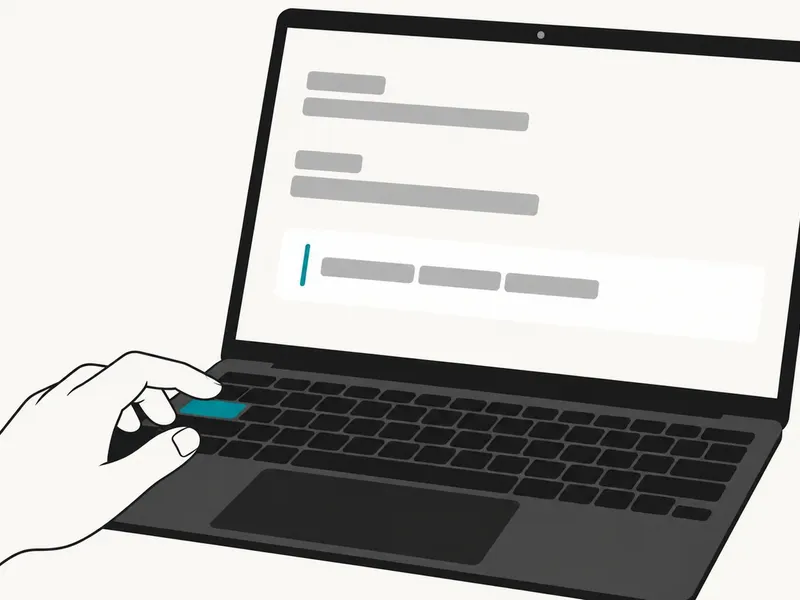
You start the message. The suggestion appears inline. If it matches where you are going, you accept it. If it does not, you ignore it and keep typing.
That sounds like a small difference. In sales, it is a big one.
You stay in control of the message. You keep the context in your head instead of translating it into a prompt. And because the writing still starts with you, the output is much less likely to drift into canned sales language.
The AI is helping with momentum, not inventing the relationship.
This matters most in follow-ups
Follow-ups are where a lot of deals quietly move forward or die.
Not because they require brilliant writing. Usually they do not. They require speed, clarity, and the right amount of pressure.
That is exactly the kind of writing where chat-style AI often feels too heavy. You do not need a fresh draft from scratch. You need help finishing the sentence you were already writing.
A suggestion that appears while you type is often more useful than a paragraph that appears after you stop.
Sales work already spans too many apps
Even if email is the main channel, sales writing does not stay in email. It also lives in Slack, meeting notes, CRM fields, proposal docs, and internal updates.
That matters because workflow friction compounds. A tool that only helps in one window still leaves the rest of the day untouched. A tool that helps across the apps where sales teams already write fits the real shape of the work better.
The benefit is not only speed. It is continuity. You do not have to keep switching modes just to get a little writing help.
Better sales writing help should make you sound more like yourself
The strongest sales messages usually do not sound "written by a sales tool." They sound direct. Specific. Grounded in the actual conversation.
That is the real promise of AI autocomplete when it is done well. Not that it writes your pipeline for you. That it helps you move faster without flattening your judgment or your voice.
That is why Typeahead is an interesting fit for sales teams on Mac. It works across the apps where you already write, suggests text inline while you type, and runs locally on your device so your writing stays on your Mac. That same on-device boundary is useful for writers who want private AI autocomplete for unpublished manuscripts.
For sales, that is a better model than asking a generator to guess the whole message. The human keeps the context. The AI helps with the next few words. That turns out to be closer to the real job.