







The disclosure map behind every client draft
5 min read

Client communication begins before you press send. The moment a lawyer types facts into an AI writing tool, another system may collect, store or disclose information relating to the representation.
Local sentence completion can remove that particular disclosure point. It does not secure the email service, host application, Mac, network or recipient. That narrower claim is also the defensible one.
Confidentiality is broader than privilege
ABA Model Rule 1.6 does not stop at attorney-client privileged material. Rule 1.6(a) covers information relating to a representation, while Rule 1.6(c) requires reasonable efforts to prevent inadvertent or unauthorized disclosure and access.
That scope matters during ordinary writing. A scheduling email, settlement update or note to local counsel can contain names, strategy, timing or facts that may not appear dramatic in isolation. They still relate to the representation.
The draft has a disclosure map before it has a recipient.
Internet use is not categorically prohibited
The ethics question is not whether client information ever touches the internet. Email itself usually crosses networks.
ABA Formal Opinion 477R says lawyers generally may transmit protected client information over the internet after taking reasonable safeguards. Stronger precautions may be required because of the information’s nature, a client agreement or applicable law.
The useful distinction is therefore not internet versus no internet. It is which parties and systems receive the information, for what purpose and under what safeguards.
Define exposure at the drafting layer
NIST defines cloud computing around on-demand network access to a shared pool of configurable computing resources. Applied to drafting, the practical question is whether the text must travel to remote computing infrastructure for the AI feature to work.
That is different from every network event associated with software. Downloading an application or model involves a network. Sending unfinished client text to a remote AI service for processing creates an additional recipient and disclosure path.
For more architectural context, see what happens when an AI tool reads your typing.
What the ethics guidance asks you to inspect
ABA Formal Opinion 512 calls for a fact-specific risk assessment before entering representation-related information into a generative AI tool. Relevant factors include the information’s sensitivity, the likelihood of disclosure, available safeguards, the effect of those safeguards on the representation and risks specific to the client, matter, task and tool.
The opinion identifies a sharper concern with self-learning tools whose outputs could reveal one client’s information to other users. It requires informed consent before representation-related information is entered into such a tool and says a general boilerplate AI provision is insufficient. It also recommends reviewing terms of use and privacy policies.
California’s updated 2026 guidance makes the diligence concrete. Lawyers should understand how a product collects, uses, stores and discloses inputs instead of relying on generalized marketing assurances. They must also follow client guidelines that restrict AI use.
This is why architecture belongs in product review. A privacy promise is less useful than knowing where the draft is processed.
What local sentence completion changes
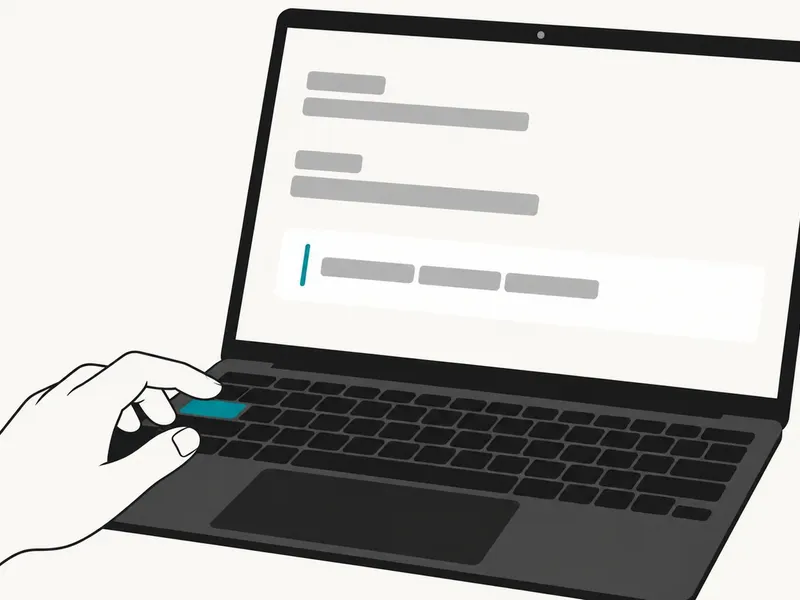
Typeahead processes writing locally; it goes online only to check your license, look for updates and download your AI model, and none of those requests include anything you write. The user’s writing is not transmitted for AI processing.
That supports one precise conclusion: Typeahead adds no cloud AI recipient while completing a sentence. It reduces the number of entities that can receive unfinished client text through the autocomplete feature.
It also keeps the lawyer in authorship. Typeahead completes sentences the lawyer has started, in the lawyer’s voice. It is not a chatbot, content generator, grammar checker, editor or rewriter.
What local processing does not secure
Local autocomplete cannot make the surrounding workflow confidential by itself. The host application may sync drafts. An email provider may process messages. A compromised Mac, an unsafe network or a mistaken recipient can still expose client information.
That is the honest tradeoff. You get narrower functionality and remove one remote AI processing path, but you still have to assess and secure every other layer.
A privacy-first drafting workflow
Before using AI assistance for client communications:
- Classify the information and consider the client, matter and task.
- Identify where the draft is processed, stored and disclosed.
- Review the product’s terms, privacy policy and learning behavior.
- Check engagement terms, outside counsel guidelines and applicable law.
- Configure the host application and delivery channel for the required safeguards.
- Obtain specific informed consent when the tool and circumstances require it.
This review should distinguish professional confidentiality from privilege. The attorney-client privilege problem with AI writing tools explains why supplying material to a third-party AI service can raise a separate set of consequences.
Where Typeahead fits
Typeahead fits lawyers who want help finishing communications they are already writing without sending those drafts to cloud AI. It runs on Macs with macOS 14 or later and is available with a 14-day free trial. It is unavailable for Windows, iOS or Android.
The product does not replace a firm’s security controls, vendor review or matter-specific judgment. Its contribution is smaller and verifiable: sentence completion happens locally, so drafting assistance does not add another cloud AI disclosure point.